Friday, January 27, 2023

10 Superman (series) Matches I'd like to see

I somewhat recently made a massive strategy guide for Superman's series within DC. As a small follow-up, these are ten matchups I think would have been really cool to see, but didn't happen, usually because the characters come from different time periods in Superman's comics, or sometimes just because it didn't happen.


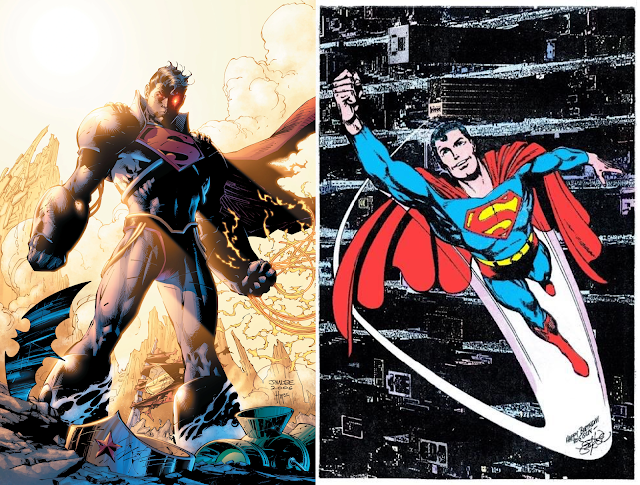
10: Atoman vs Subjekt-17

Why I would like it: Atoman the failed Nazi attempt to recreate Superman vs Subject 17 the alien the Soviets tried to turn into their own Superman. The circumstances for this fight basically write themselves.

How I think it would go: Atoman returns in the 1960s as he did originally but instead of attacking the United States, he attacks the Soviet Union, another massive enemy of the Third Reich. In his attack the Soviets are desperate. Ideally the issue would be deliberately retro-styled to fit 1940s era war-period art depicting the Nazi-Soviet conflict. Realistically Subjkect-17 should just smash as Atoman's kryptonite energy blasts shouldn't do anything to Subjkect-17 but I think it would still be a cool fight. 


9: Brainiac vs Bizarro

Why I would like it: I'm really surprised that this fight hasn't really happened in any major form. This fight sounds hilarious: Brainiac has perfectly "logical" thinking and doesn't understand irrational thinking while Bizarro thinks completely backwards.  Brainiac would be constantly frustrated by Bizarro's completely insane actions and trying to contain the recklessly destructive doppelganger.

How I think it would go: Brainiac, wanting to analyze the strangest specimen of the multiverse tries to collect Bizarro Metropolis with Bizarro getting involved. Brainiac should realistically win, but Bizarro is a pseudo-gag character at times, and I can see him getting some kind of goofy win like Brainiac trying to overload Bizarro's brain with raw information and Bizarro's reverse brain actually somehow sucking data for Brainiac. I'd personally like if the fight was a parody of one of Superman's famous fights with Brainiac, like the one at the start of the Superman: Brainiac arc, but I'd be happy with either winning. 


8: The Host vs. Ruin

Why I would like it: The Host are an advanced pre-human race, the remaining members possessing a robot body. Ruin is Superman's old friend the scientist Dr. Emil Hamilton turned supervillain. I think Ruin would find the host absolutely fascinating just from a scientific perspective.

How I think it would go: Ruin would try to capture the Host to analyze them. From there I think it would be narratively satisfying for either of them to win. Ruin could hypothetically win via sending them into the Phantom Zone but arrogantly he might decide he doesn't need to or doesn't want since he wants to get their scientific knowledge, something the Host could chastise him for his arrogance. On the other hand, Ruin could also just completely show them up with "modern" DC technology, commenting that they're stuck in the past, while he's a beacon of the future. Both could reflect their other's psychological weakness.


7: Gog vs. Black Zero

Why I would like it: Two of the strongest Post-Crisis villains of the Superman family going head-to-head, the killer of alternate universe Supermen vs the killer of alternate universe Superboys. Both even have hypertime associations so they'd get into a big meta battle traveling through Superman's metafictional history trying to stop each other from having been created.

How I think it would go: Honestly, there's only one real way this could go. Gog is on the winning side, beating down Black Zero until Black Zero brings in an army of Doomsdays and Gog only says "Not again...."


6: Dominus vs Lady Blaze

Why I would like it: Dominus and Lazy Blaze are two of Superman's strongest enemies in general, and both are cosmically intelligent godlike entities. Dominus represents delusions and Lazy Blaze manipulation so the lord of chaos and the demoness could have a cool cosmic chess game with the material universe trapped in the middle. 

How I think it would go: Dominus kills Lady Blaze only for her to reveal it was one of her illusions, she then kills him only for him to reveal it was one of HIS illusions. He then kills her only for her to reveal it was ANOTHER illusion and so on. If the two were to really fight I think probably Dominus would win, though it could go either way and narratively I think Lady Blaze probably should if she's the Empress of Hell.


5: SuperDoom vs Redemption

Why I would like it: SuperDoom and Redemption are both characters who think they're heroes and are empowered by the psychic energy of people believing in them. Probably the only reason they aren't contrasted is SuperDoom is from the New 52 and Redemption is from Post-Crisis. Their battle would be one not just of bodies but of hearts and minds as they would have to try and get people to believe in them.

How I think it would go: Redemption should win on paper, he fought a Superman with much more experience and better feats. That said narratively it would depend on which belief is stronger, the belief that Superman is the ultimate narrative concept or the faith Jarod Naylor got to protect missionaries in Africa by his congregation. Redemption is a more noble figure and probably would win. I can see something being made of the fact that SuperDoom is pure psychic energy, he's a being made entirely of belief, while Jarod is a real physical human empowered by psychic energy. They might have Redemption be weaker because he still has a physical body to tire and injure, or SuperDoom be weaker as he can be absorbed or has no physical will to push him further, or most likely have the former happen first to set up tension and the latter happen to give Redemption the win.


4: Wraith vs Doomsday

Why I would like it: This is a matchup that's just begging to happen. Both characters were physical powerhouses even stronger than Superman. Wraith was a weapon made by the US Government as a last resort...and Doomsday is certainly the monster that would push them to use a weapon like Wraith. During Doomsday's first rampage on Earth, if Wraith had been thought up, it would have been super natural for them to deploy Wraith to fight Doomsday.

How I think it would go: It depends when in Doomsday's timeline this is. If it's the initial Doomsday, I think Wraith could probably handle him, though Doomsday's regeneration and adaptation would cause him to sooner or later become a threat Wraith couldn't stop. I think Wraith would stop Doomsday initially, but Doomsday would eventually get his revenge, making a point about how Wraith can't evolve the way he and Superman can.


3: The Eradicator vs H'el

Why I would like it: Two of the most OP villains of their periods, both believing they are the carriers and preservers of Krypton's legacy, yet would absolutely hate each other. The specifics depend on when in Eradicator's story H'el arrives on Earth but the Eradicator would be the legendary Kryptonian superweapon H'el would know about and want to take as his birthright as Krypton's heir.

How I think it would go: H'el would briefly overpower Eradicator via physical abilities, and has advanced time manipulation abilities, but there's no way that a fight between two Kryptonian entities proud of their heritage would not end in a mental battle of Torquasm Vo, in which Eradicator would probably win.


2: Apex Lex vs Brainiac One Million

Why I would like it: Brainiac and Lex are two of my favorite villains ever, and have a long assorted history with each other. They've been allies and enemies. They are the badness of humans and the badness of aliens. Lex is the ever-evolving will of humanity, and Brainiac is the consciousness desire to impose order on the chaotic. Both got incredible power-ups from Perpetua, but the two never got into a fight due to their shared allegiance to Perpetua. But it would have been incredible if they somehow had to.

How I think it would go: Assuming for instance Perpetua has the two fight as a way or practicing with and training their new powers, this would be a bizarre otherworldly matchup. Apex Lex has the firepower advantage with some of the most broken offensive powers in DC, the seven crisis energies. That said Brainiac One Million has the ability to move through and even bottle hypertime, the metafictional time making up DC history, allowing him to avoid being hit and hit back without consequence. I think it would end with a good ol fashioned matchup of intelligence between the two, as both attempt to trick each other. Both have succeeded in deceiving the other one before so it could really go either way. 


1: Superboy Prime vs. Pre-Crisis Superman

Why I would like it: This matchup would be excellent. Superboy Prime when he showed up in Post-Crisis was meant to be an indication of the gap between the Silver Age and the Modern Age both in terms of morality, with him proclaiming that the Modern Age's greys show their moral degradation and that they're ruining the perfect Earth he had, as well as power level with him being treated as a next level crisis threat for being a murderous Pre-Crisis Kryptonian. Before there was Omni-man, Plutonian, Brandon Breyer, and Homelander there was Superboy Prime. Pre-Crisis Superman actually is the emblem of the Pre-Crisis period and was less morally black and white than people think, but was always the archetypal hero. Superboy Prime thinks he's fighting for Pre-Crisis Superman, but if Pre-Crisis Kal-El were to return via Hypertime shenanigans he would absolutely want to stop the boy-turned-killer. 

How I think it would go: They may be similar in abilities, but Pre-Crisis Superman has experience fighting other characters on his level, and more then that has willpower and determination. Even more than that though, having to fight his idol himself would break Superboy Prime emotionally as he would be forced to question himself in a way he's never had. Pre-Crisis Superman saves the day again.

How they Compare: A Hideous and Blood-Curdling Ploob


The Poob is a monster that was employed by Horville's Hut of Horrors on the Forest Moon of Endor, during the Galactic Civil War. The Ploob was one of several monsters used to scare the Ewoks. 

Ewoks are strong enough as a species to fight against the Stormtroopers, Imperial troops capable of easily withstanding the gravity of numerous planets, Endor for instance having a gravity 2.5 times standard. A group of Ewoks with just spears were able to defeat a large boar-wolf and the Ewok Teebo used a stone axe to chop at a condor dragon's leg. These feats are likely in the low superhuman range being slight exaggerations of what humans or similar species could do. As a monster meant to scare the Ewoks, the Poob should scale to this level. It's also kind of narratively implied to be superior to the monster the "snake-eater" since Horville seemed to be ramping up the scariness of each monster he showed the Ewoks, with the snake-eater being presumably fast and tough enough to chase and eat snakes. 

The Ploob's most famous ability is being scary, to the point of being used specifically to scare Ewoks, Ewoks being legendarily brave, referenced in every significant description of them. The Poob is stated to be blood-curdling as well. To curdle something is to separate it into clumps, something that would be lethal on any creature with blood... if it was a literal statement though it's most likely hyperbole.

Name: Ploob, Poob, a Hideous and Blood-Curdling Ploob
Origin: Ewoks/Star Wars
Powers and Abilities: Being Scary, Being Hideous, Possibly Blood Manipulation
Weaknesses: Name Mispronunciation
Destructive Capacity: Likely Superhuman Level
Range: Unknown
Speed: Possibly Superhuman Level
Durability: Likely Superhuman Level
Stamina: Unknown
Standard Equipment: None
Intelligence: Unknown

So how would the Ploob do in other universes?


In the Marvel Universe, Ploob would be literally civilian tier with the kids that the Thing works with showing unrealistic human feats. Possibly a mild threat in universes outside Earth-616.


In the DC Universe, Poob would be civilian tier as well. Even Jimmy Olsen and the Newsboy Legion were able to contend with clones of Jim Harper, the original Guardian. Possibly a mild threat in universes outside Earth-1. 


In the OPM-verse, Ploob would be considered a wolf level threat in disaster levels, a "potential threat that poses a danger to an unknown degree" but would, of course, be beaten by the world's greatest hero Mumen Rider who fought the wolf level threat "Angry Grandpa." 


In the Star Trek-verse, the Poob would likely be above redshirts, the same way it's likely above stormtroopers, both able to survive on planets with different gravity levels, but would be beaten by any significant fighter due to similar stats from Spock breaking a metal gong in half with a strike and Kirk moving a solid human-sized boulder quickly, as well as them having better abilities.


In the AI invasion series, the Ploob would do interestingly, having below-average stats but high enough to threaten low tiers like animals and having a scary visage that would likely scare the people of the AI Invasion-verse given their very low common sense. The Poob would be especially interesting in the Zoo section, as numerous animals there have short-term memory loss, and would thus never build up any kind of resistance to the Ploob's scary visage. Overall could be used tactically to deter people from an area.

Thursday, January 26, 2023

Favorite Touhou Characters


I've recently completed going over the final Touhou game and because the Touhou fandom seems fairly focused on favorite characters, I decided to go over my top 10 list of favorite characters in the series, plus a few other notes about the series.

Broadly there were three recurring metrics that placed one Touhou character over another for me:

1: Agency within the story, decisions that change things. This is often but not always correlated with their actual power.

2: Wisdom and/or Sensibility. Are they depicted as making reasonable and logical decisions? Do they develop as a character based on their experiences?

3: Their interactions with other characters, particularly if they're usually starting problems, or are they show heavy loyalty either to a superior or to their group.


 I hope you enjoy.


Top 10 Favorite Characters in Touhou:


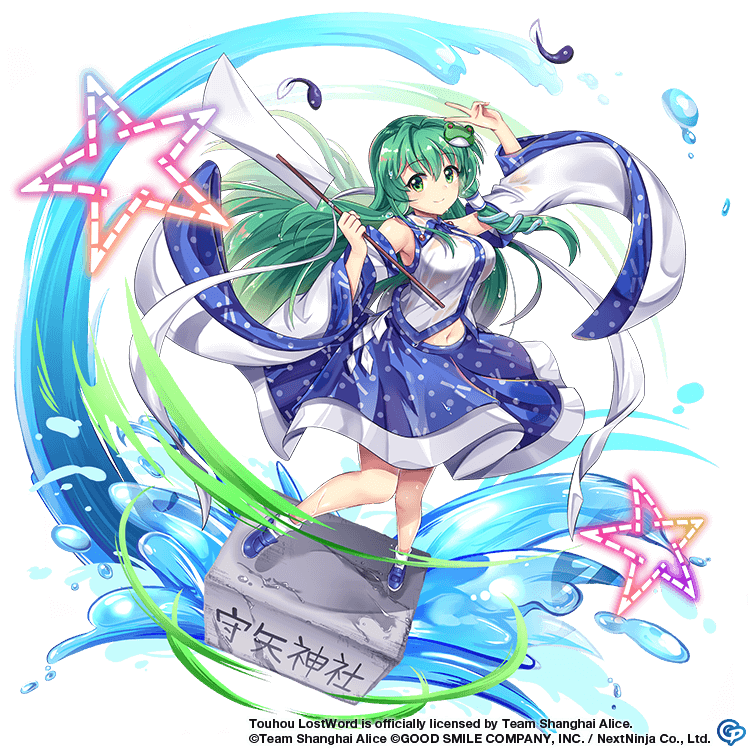
10: Sanae Kochiya: In a world as surreal and combat-heavy as Touhou, Sanae was a breath of fresh air. She's a character from the real world, a trait shared by few other characters, and Sumireko wasn't exactly providing a relatable character for me. Sanae proved a wholesome alternative to Reimu, reflecting closer to the real-world values of wholesomeness.


9: Tewi Inaba: Yes, I'm a fan of the rabbits, I'll hold for your surprise. Tewi is suggested to be the same as the legendary folklore character the white rabbit of Inaba. Tewi was an example of both sides of the rabbit stereotype of fiction, befitting her inspiration being both a cutesy figure and also a trickster figure. Her relationship with Reisen was funny, and her manga chapter from Wild and Horned Hermit depicting the origin of Yokai rabbits is one of the most memorable parts of the series.


8: Mononobe no Futo: Futo is mostly known for her one gag, and I do like language-based gags like Futo's deliberately archaic speech pattern. I also like her for her cute relatable personality, one based on being apparently a "scaredy-cat" afraid of change. Similarly, I like her loyalty to her master Miko. Loyalty is one of the virtues I enjoy most in characters, which will probably be seen by the rest of the list. I also enjoyed her team-up with Ichirin that allowed the two of them to do better than even their quarreling masters could, a really good and subtle metaphor. 


7: Byakuren Hijiri: To be totally honest, in her debut game I wasn't that fond of Byakuren. I don't think that game shows her in the best light as it seemed hypocritical of an enlightened Buddhist representing compassion to be violent and against humans. However, as time goes on she gets much more development and her kindness and compassion get better demonstrated. I think she's a very sweet character and an interesting contrast to her rival, and I think she has an interesting place in a universe as focused on combat as Touhou.


6: Yukari Yakumo: Yukari started out as not just the most interesting character in Touhou, but the character that seemed clearly written to be. She gave me shades of Yuuko Ichihara, a character who is top ten worthy of my favorite characters of all time as a powerful, playful, chaotic but ultimately good-aligned magical woman of extreme but nebulous power. Her powerset and interactions were all very interesting and she was instrumental for Silent Sinner in Blue to happen. The only reason she's not in the top 5 isn't she hasn't done that much lately.


5: Toyosatomimi no Miko: Miko's a lot like Yukari for me. She's a very powerful and interesting character whose best content was around when she was introduced. I loved her team and her position in them. I thought she had a much more proactive goal than most of the characters in the series with interesting yet clear powers, a fun funny personality, yet enough humility to recognize when she was outclassed. However, while her best stuff was a while back, she's been a bit more active than Yukari since then and still gets involved or at least sends her forces to be. 


4: Sakuya Izayoi: Sakuya was originally my favorite character in the series and while I liked Reimu and Marisa fine, I can't say the series wouldn't have been noticeably improved if the two main characters were Sakuya and Sanae. Sakuya is one of the most impactful characters in the series, probably the third-most main character in the series, yet her impact is all positive. From her introduction, she instantly proved to be more of an elegant and serious character than other playable characters, at least trying to avoid excessive fights, and motivated strictly by loyalty to her lady and adopted family, a highly admirable quality. She has a really cool iconic type of power, and as a Tokyo Mew Mew fan, I can say I like the aesthetic. 


3: Okina Matara: Probably the most immense presence of any Touhou character, Okina steals the scene every time she shows up and shows an immense amount of agency and pro-activeness. Her goals are left ambiguous, yet clear enough that she doesn't feel like a deus ex machina and she's been absolutely fundamental to multiple games so far. I greatly enjoyed every one of her appearances, and I really enjoyed her procession of titles in her introductory game. It's possible that like Yukari and Miko, she'll slowly be used less and less and perhaps lower slightly in the ratings. Time will tell if the Hidden God maintains her seemingly absolute presence.


2: Eirin Yagokoro: My favorite part of Touhou was the lore connected to the Moon. Once again, I'll hold for you to recover from the shock that a Sailor Moon fan would be interested in a mystical moon kingdom. The Lunar Culture is the most interesting lore of Touhou because it's so different and Eirin is perhaps emblematic of that different feeling. Eirin is great in every regard. Her motive, loyalty to the exiled Lunarian Princess Kaguya is perfect; immediately sympathetic, evocative and gives her agency. Her powers are interesting for the series and powerful but clear in their limits. She's essentially a super-genius with access to god-tier medical abilities but lacks understanding of the non-Lunarian world. Even her aesthetic is on point, I enjoy the nurse aesthetic well. Despite being no older than my number one character, Eirin was, for probably the majority of the series, my favorite character. But as of now, there's one character I like even more who was introduced in the same game...


1: Reisen Inaba: Like I said, Sailor Moon fan, and this one is LITERALLY "tsukino usagi." More seriously my favorite part of Touhou was the Lunarian lore, and my favorite part of THAT was the Lunarian rabbits that Reisen represents. Reisen is a character that's interesting in a lot of ways. She's got a tragic backstory that informs her personality, agency, interesting interactions with several characters on this list, and fun powers. She's just in general a super versatile character. That alone put her high, but the thing that put her close to the top was her ending in Urban Legend in Limbo, which is my favorite part of the entire series. In a conversation between Reisen and Eirin, even Eirin, Reisen's master didn't know what to make of the events upon the Earth and suggested they should stay neutral but Reisen declares herself an Earth rabbit and chooses to help anyway, a moment that gave me flashes of my favorite series.


Some other Categories:

Honorable Mention:


Kasen Ibaraki: Would have been #11. Was really good, especially in her own manga. However, a lot of the top characters I picked between because I liked the interactions with other characters I really liked and Kasen doesn't interact that much with a lot of the other characters in the top ten. She had a really good one with Miko where Miko recognized Kasen's hidden power due to her wisdom and humbled herself immediately and she briefly interacted with Yukari at one point, but more would probably have put her on the list.


Most Underused Character:


Medicine Melancholy: Had a really interesting concept and associated powerset, reminding me of the Pisces Gold Saints from Saint Seiya. However, she only shows up with any notability in ONE game and has little prominence in any of the manga that I can recall. She easily had the potential to be on this list but there was just so little content about her.


Most Character Development:


Reimu Hakurei: Honestly, it's not really a surprise, most series have the central protagonist get the lion's share of character development. Reimu's character development is hard to see the full arc of, at least at the moment. It seems to be one however of coming to develop empathy and an ability to understand the feelings of others, something Reimu usually doesn't do due to her highly eccentric viewpoint, and broadly growing more pro-social. 


Least Character Development:
 

Cirno: Had an entire game to herself, still didn't develop because jokes.


Favorite Story:


Silent Sinner in Blue: Great manga, characters feel a lot more motivated than usual, focused on the Lunarian lore, my favorite part of Touhou. Also has cool concepts everywhere like Reimu invoking Amaterasu's power or Gensokyo's version of space travel. Has my favorite story for Yukari, and includes Eirin and the Rabbits prominently. 


Favorite Game Story:


Hopeless Masquerade: Due to being the only game to focus on it, probably the best depiction of Miko and Byakuren's conflict. All the characters in this game have strong motivation beyond just "something weird's going on, let's find out what it is." In this game to restore the spirits of the humans, the followers of each religion; Reimu's Shintoism, Byakuren's Buddhism, and Miko's Taoism are all striving to spread their faith to restore the people's spirit in their direction. Plus all the other characters have their own related motivates whether it's supporting their leader or just trying to get a profit from the conflict like the Kappa. There are a lot of small good things about the game's story, but broadly all the characters have proactive agency and compelling motivations.


Favorite Game Cast:


Imperishable Night: Introduces Tewi (technically), Eirin, and Reisen. All the other new characters are at least above average for the cast as well. Of the eight returning characters that are playable in four teams of two, it includes Sakuya on one team and Yukari in another

Sunday, January 22, 2023

Sailor Moon Infinity Arc Review and Ranking

The Infinity arc's reception noticeably changed over time. I remember in the earlier days of the Sailor Moon when the Infinity arc was super popular and considered possibly the best arc in the series. Nowadays while people don't exactly dislike the Infinity Arc, it certainly seems to have lost it's luster to the point I saw a recent poll putting it as the worst of the Sailor Moon arcs. And it seems to me the reason for the shift in this perception is that the biggest thing the Infinity Arc did has started to be taken for granted. The Infinity arc introduced three of the four Outer Senshi, the Senshi that at the time were viewed as cooler, more mature, more deep than the Inner Senshi and were massive breakout hits as characters with both Haruka and Hotaru being so popular that they have topped Sailor Moon character popularity polls. While these characters aren't disliked now, the fact that the Outer Senshi have been in so much more than this one arc has caused people to not really view that as such a special trait about this arc. Plus there's the whole thing of the arc is arguably the darkest arc of Sailor Moon with a gritty mature conflict of "is it right to sacrifice the lives of innocents to protect the lives of the many" which played really well in the darker "too cool for school" attitude of the 90s but in the 2010s a massive disdain for dark and gritty, and a massive appeal towards bright and childish became popular so the major feel of the arc became not quite so enjoyed. While I definitely think the Infinity Arc has aged far more gracefully than a lot of 90s edginess, I can sort of understand where people are coming from. With that said I think my position on the Infinity arc on the manga has remained relatively consistent.

For me, the middle three arcs of the manga are all roughly similar in quality, though while I do think all of them have their own relative strengths and weaknesses, I do have a soft spot for the Infinity arc and would probably rate it the best of the three. This is for a variety of reasons but let me start by not making what I believe to be a broadscale failure to recognize innovation. The Infinity arc introduced Haruka, Michiru, and Hotaru as characters all of which are beloved characters, more than any arc in the series save the first and it probably has the best usage of the characters in the entire series. Haruka and Michiru are both really good characters. I appreciate Haruka's emotional character growth over the arc even if I don't personally connect to her well. She's nonetheless very well written in her in her emotional contradictions and the way she paradoxically draws close and far to Usagi at the time. In opposition, I connect well to Michiru though she doesn't have as much attention as any of the Outer Senshi. I greatly enjoy and appreciate Haruka and Michiru's inclusion and what it meant for the Japanese Yuri community, and the level for which the pair were important for the self-realization and social acceptance given to many, and I applaud Naoko for her forward-thinkingness in that regard. However even more so, I absolutely adore Hotaru, and have since I was a kid. She had the strengths I loved from both characters; she has my favorite emotional character development in the arc and is a character I felt immensely personally connected too. She's such a versatile character, adorable enough to have cutesy bff romance scenes with Chibusa-chan and also with enough of a dark presence to terrify an eldritch horror while speaking to herself about how beautiful the agony in the moment before death is. She can be tragically heart-breaking or even really funny and sometimes is both in the same scene. If she was just this, that'd be good enough but she is also one of the most dynamic characters in the series constantly changing and developing everytime you see her with a broad emotional arc during Infinity of realizing that she truly wants to live, that protecting people is important to her, and that even after losing everything material to her in the world she still has the strength deep in her soul to fight. 

The arc has some of the most themes and most mature themes in the entire series. It's perhaps the only one so far I don't think I really got to the bottom of it's layers because it's so complicated thematically. But it's filled with themes and concepts that mean a lot to me; themes of the cycle of life and death, the body and the spirit, transformation/rebirth, gender, LGBT expression, childish idealism vs adult cynicism and religion. Compare this to the first arc's themes  of identity and destiny, or the second arc's theme of responsibility and maturity and you can see why it's harder to really talk about the third arc's themes, because there's so much happening. If I had to try and tie them all together, it's about the importance of the heart of someone, the soul of someone, as opposed to the physical condition of them. Usagi first didn't understand Haruka when she thought Haruka was a man, but as she came to realize Haruka was a woman like her, was a Senshi like her, it was linked to her coming to understand the Outer Senshi' hearts were like hers, that they were soldiers for the same mission, with the same goals and intent. This blossomed into the Super Senshi form being an expression of their hearts coming together because even though physically they seemed to be at each others throats, downright literally with Cyprine controlling them to fight, their hearts were always as one and when they were able to recognize that, it allowed them to become greater than the sum of their parts. The Outer Senshi wanted to kill Hotaru, but the irony is her heart was always alive, always fighting even as her body and everything about her physical condition was dead while their hearts were broken knowing what they had to do, even though the seemed to live lavish lives of luxury, as cool adventuring Senshi with a rich lifestyle. The Outer Senshi seem glamorous and impossible to measure up too, being older, more powerful, more experienced, more knowledgeable, rich, with an intimidating presence, but the true heroes of the story are Chibiusa, Hotaru, and Usagi. Chibiusa for first trusting in Hotaru, not caring about her creepy powers but believing she needs to save her friend above all else, which allowed her to reach Hotaru before the Outers. Hotaru for realizing that even with everything physical she ever had gone, she still had power in her soul that she was willing to fight with for her Chibiusa. And Usagi for constantly trusting that the Senshi hearts were all as one, that they were all people with the same true intent, and with the same emotions. Conversely the villains of this arc the daimon are specifically seeking out the physical; extensions to their lifespan, something Professor Tomoe specifically calls out as his goal, but do this by sacrificing the souls of others. They literally sacrifice souls, the hearts of people for the physical. Similarly they break the Taioron crystal represent temporal life for the Silver Crystal representing eternal life. The Daimon and Pharaoh 90 do not recognize the importance of the soul or people hearts, and will remove those things to wear their bodies like skin suits. The broad message of this arc is to recognize the importance of the heart, of the soul, of the person within, both of yourself and of others.

This arc's themes also ties in with the two broader themes of the Sailor Moon manga as a whole; the pain of isolation and the ennobling power of love. The Outer Senshi are defined by isolation. Their backstory involves living in isolated territories away from their home and everyone else for their duties, causing them immense emotional pain. Even though they are adored, they are also isolated with few others to understand them, and though they pull away from Usagi, it clearly hurts them to do so. Hotaru is isolated; she's a loner not by choice but because her classmates spun her for her creepy powers. Professor Tomoe is isolated, ostracized by the scientific community which is maybe part of why he's so insane without any other voices to contradict him. Conversely it's in the love of her friends, in the unity of their hearts that Usagi develops her stronger form, Super Sailor Moon, explicitly the source of her powers. It's explicitly because their hearts are as one that she in the final battle can enter Pharaoh 90 to awaken Sailor Saturn. Similarly it is her love for Chibiusa that allows Hotaru to fight Mistress 9 and which turns Sailor Saturn from the ultimate enemy, the messiah of silence, into an ally that saves the world. 

If there's any faults to this arc it's that it sometimes gets a little too ambitious, tries to be a bit too smart. There is no moment in the Infinity Arc that strikes me as hard as Usagi's defiance of Demande on Nemesis or Diana taking the responsibility for Sailor Pluto. Those were moments defined by the purity of the heroic character and the sheer contrast with the situations they were put in, the wisdom coming from a pure character unwilling to let a dark situation stop them. The third arc is almost too smart for that, every moment in it is full of emotional depth to the point that no moment is just simple elemental goodness. The closest is perhaps Hotaru as a ghost's goodbye to Chibiusa and that might indeed be my favorite moment in the arc for that reason. If I was to compare this arc and the last to anything in their relation what jumps to mind is the comparison between the Dark Tournament Arc and the Chapter Black Arc of Yu Yu Hakusho. Chapter Black is moodier, angstier, more mature, more thought out, more complex, more consistent. However it's so mature it never reaches the elemental level of emotion seen in the climax of the Dark Tournament. Sensui might be more complex then Toguro, but in that complexity there's a lack of pure immediate emotion. Similarly the climax of Infinity Arc is more complicated than climax of the Black Moon Clan arc, it's got a wider range of emotions, and it lacks any weird dips in quality, but it can be too ambitious (such as its fight choreography which tends towards being confusing) and it can lack the emotional impact of simplicity.

With that said I obviously love this arc to pieces. This arc as an advantage compared to the arc before and after it is consistent. The good parts of the arc are distributed a lot more evenly and even lower ranked acts this arc are significantly better then the worst acts of almost any other arc. It's an arc I think characterized more than anything else by Naoko's ambition. She had already revolution-ized the Magical Girl Genre and she set out to do it again AND SUCCEEDED. If any arc has an influence on pop culture after the Dark Kingdom arc, for better or worse it was the Infinity arc. It's an arc that seeks to tackle some of the most serious and hotly discussed topics there are. It introduces truly ground-breaking characters. And all the while it keeps the things that make Sailor Moon great; cosmic imaginative world-building, a sense of both grandeur and atmosphere this time of apocalyptic proportions, and perhaps my favorite part of Naoko's writing; the synchronization of the physical narrative and the emotional narrative behind it. 


Arc Ranking:

12: Act 27: This is what I mean by the arc is more consistent than the first or second arc. This is the worst act of the arc and it's really not bad at all. Act 27 is the first arc of the arc, and as such it's kinda slow needing to set up everything. I don't really feel like it being 75 pages, tied for the longest act in the entire series is justified and it feels a bit slower than the rest of the arc. It's got some good parts. Mamoru holding Diana is cute, there's some mild gags, it sets up Haruka and Michiru pretty well though Hotaru only comes in at the VERY end of the act. There's nothing really wrong with this act, it's just the act is basically just setting up for the rest of the arc. 

11: Act 34: Act 34 has probably the worst part of the arc, though it's not that bad. It has the anticlimactic resolution to the Guardian and Outer Senshi not trusting each other with the Labyrinth plotline. The anticlimax of the arc is really what holds it back and I did switch it around with Act 27 a few times. That said Kaorinite is a really cool villain and she single-handedly gives the act a lot, especially with resurrecting the Witches 5 and casting a occult curse on the Senshi. It also has some good conflict between Usagi and Haruka as well as Usagi and Mamoru being cute, and the start of ghost Hotaru. I guess I'd give it a slight bit of advantage over Act 27 just for efficiency, being much shorter and having all 5 Guardian Senshi fighting the Witches 5. 

10: Act 31: Act 31's another act that doesn't have a lot to it. It's the Tellu act, and outside Sailor Pluto awakening and showing up in the latter half, not a whole lot really happens. There's some cute stuff with Chibiusa and Hotaru, there's some good emotional stuff with Usagi and Haruka. It's got all the basic fun stuff in the Mugen act, but lacks a bit of personal identity. I will say Chibiusa making her classmates jealous by wanting to give her arts and craft project to Hotaru is funny and the scene of Hotaru being possessed my Mistress 9 and scaring her bullies was cool. I just wouldn't be able to tell you which act they're from off-hand.

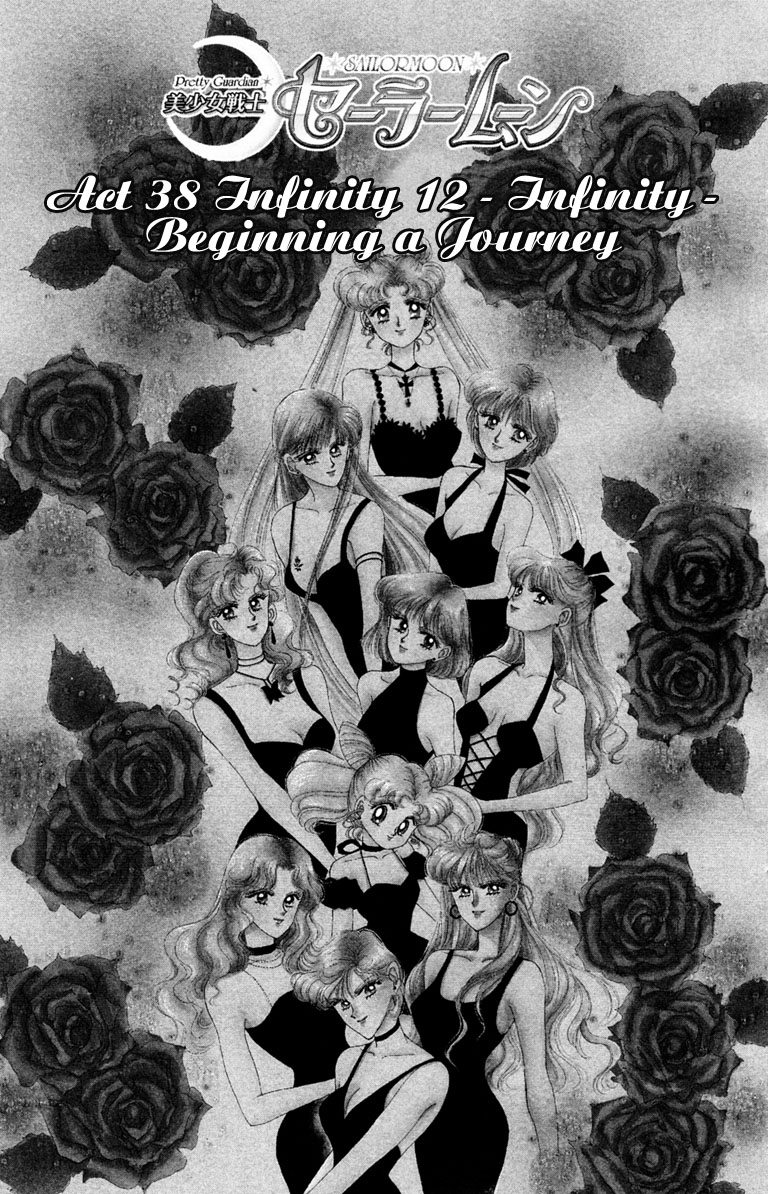
9: Act 38: The final act is comprised of three sections, all of which are pretty good individually but also leads to this act feeling a bit disconnected. There drama with Hotaru and Setsuna doesn't super land as well since there's not really any special established connection between the two. The themes of rebirth are pretty strong here, and the start of the dream arc is pretty good, overall this is a really enjoyable act however this is probably the weakest epilogue act in the series. 

8: Act 28: Act 28 is another setup act, similar to Act 27 but is shorter, more efficient, and springboards off the introductory elements Act 27 set up. There's two really great Hotaru scenes here that set up the dichotomy of her character; first her friendship scene with Chibiusa where she heals Chibiusa's wound, and then later her confrontation with her father and Kaorinite, only to be comforted by her father as she lays ill. While Act 27 were focused around building up Haruka and Michiru, Act 28 focuses around building up Hotaru and the villains, as well the mystique of the new Senshi. The act also has the Eudial plot, complete with the really cute scene of the Senshi celebrating Rei's birthday with her. 

7: Act 35: Act 35 like Act 38 is comprised of three sections, the backstory of Professor Tomoe and Hotaru's robotic body, the Outer Senshi sharing their backstory with Sailor Moon, and Hotaru beginning to fight back against Mistress 9, however these sections are not just individually stronger but tie into each other MUCH more than Act 35's. Hotaru saving Chibiusa's soul is fantastic; it's sweet, awesome and symbolically rich and that this act isn't higher for it speaks to the quality of the arc as a whole. The other two sections are, while weaker and could each have been handled a bit better with some tweaks, still quite good one really complimenting the themes of the arc, and the other really complimenting the themes of the series as a whole.

6: Act 37: The penultimate act of the Mugen arc truly is an iconic act for Sailor Moon, involving the awakening of Sailor Saturn and her defeating Pharaoh 90. It's a real contrast with Act 35 as instead of several vignettes good in their own way, Act 37 is incredibly focused. Yet despite it containing only really two broad sections, it doesn't have any feeling of drag, being so atmospheric and emotional carrying the weight of Sailor Saturn better than any act in the entire series in all her complexities. It's also got the climax of the arc's themes with Super Sailor Moon choosing to trust in Sailor Saturn, willing to believe even the Senshi of Death has a heart in unison with theirs. 

5: Act 30: The Top 5 acts of this arc are in a higher tier than the rest of the acts of the arc, the way the last two acts had three acts that were their own top tier. Act 30 is an act that isn't really about Sailor Senshi stuff and is instead about Usagi and Mamoru's relationship and the resolution to their feelings in relation to the new Outer Senshi. Usagi and Mamoru's relationship is my favorite in all of fiction and I love this act for the depiction of their love. I also really enjoy the stuff with Usagi and Haruka resolving the emotional conflict of last act. I can understand why someone might not like this act as much since the Viluy stuff doesn't take up that much time, though I think it's got a lot of spectacle for a villain of the month, and I can understand some objection to Sailor Pluto being brought back, but this act just gives me the feels.

4: Act 29: The Sailor V homage act! More than anything I love this act for it setting up the dynamic between Usagi and Haruka as well as the dynamic between Chibiusa and Hotaru. When I think of how those two pairs of characters interact, the paradoxical push and pull between Haruka's emotional advances and aloofness vs Usagi's desire to work together but also confusion towards Haruka's aim or the sweetness of Chibiusa wholesomely believing in Hotaru, this girl whom has had such a hard life and just so deserves a sweet loving friend, I think of this act. That's not even all to love about this act, it also has the cute Sailor V homage, even if the act doesn't really go that far. Still, such a fun sweet act.

3: Act 32: The decision on which was higher between this act and the one above it has been the hardest decision I've had to make ranking acts next to only Act 22 vs Act 24. Act 32 is a great act, another iconic one for the arc. This is broadly the end of the first half of the arc, where Usagi's continued push to know and understand the Outer Senshi comes to a head and is rewarded when even Cyprine brainwashing them to fight can't stop her from using their unity of their hearts to turn into her Super form. Even better this act has one of the most effecting parts of the whole arc, maybe even the entire series as we see Hotaru's backstory and the mysterious image of the Outer Senshi gazing at her sadly through her window which she wonders if they are Goddesses of death. The Cyprine stuff is a little weird this act is great.

2: Act 33: Act 33 ties up the loose ends of the first half of the arc and sets up the second half of the arc in an incredibly efficient elegant way. This act introduces the idea of Sailor Saturn and recontextualizes the fall of the Silver Millennium, connecting the arc into the broader scope of Sailor Moon story. Naoko gets to write in her true specialty, mystical cosmic spectacle with an ethereal texture. This act introduces the central philosophical question of the arc and subtly answers it beautifully. It has Chibiusa outrunning the Outer Senshi to get to Hotaru first, it has the awakening of Mistress 9, it has the first appearance of Super Sailor Moon. This is an act that shows what's great about the third arc and connects with the rest of the series. It's a little bit exposition-heavy but it's great.

1: Act 36: Fantastic act! This act flies by when reading it because it's so incredibly engrossing. This is an act that showcases just how amazing a character Hotaru is, having her protect the Guardian Senshi's souls and has her returning Chibiusa's soul giving probably the best scene in the entire arc. This act is for Hotaru what something like Act 13 or Acts 21-22 are for Usagi, an act to show just why she';s such an amazing character, and all before she even transforms for the first time. It is a scene that speaks to the themes of the third arc embodied in its best character imo. If that was all this act was, it would still be competitive with Acts 32 and 33. But it has also the revelation of what Pharaoh 90 is and wants, probably the most abstract and consequently one of the most interesting monsters in the entire series, it's got one of the best sections for Chibiusa in the entire series, it's got the sweet hilarious line of Mamoru's, it's a fantastic act.


Sub-Arc Ranking:

So the last three acts really don't have clear sub-arcs, but I would roughly divide them into halves which makes them feel a bit weird to "rank" but whatever. In this case the two sub-arcs were VERY close in quality, reflecting the overall consistency of the arc.

2: Talismans Sub-Arc (Acts 27-32): The first half of the arc is by far the best first half of an arc so far and is good enough that even the first half of the Stars arc does not clearly eclipse it in quality with for me is huge praise. While it starts off a little bit slow, having to introduce the elements of the arc, it accelerates into full gear much faster than the Dark Kingdom or Black Moon Clan arc with some absolutely really good acts like Acts 29 and 30 showing lots of clever character writing and sweet emotional moments and with a great mid-season climax act with Act 32.

1: Messiah Sub-Arc (Acts 33-38): While Sailor Moon acts usually start out a little slow and ramp up, the Talismans Sub-Arc is a really good sub-arc, with the Messiah Arc being only a bit better, to the point I was actually not sure which one I'd put higher. While the Messiah Sub-Arc does suffer from having some relatively anti-climactic elements and focusing a bit more on spectacle than the clever character writing that the first half had, it has fantastic acts like Acts 33 and 36 and a lot of fun moving elements. Overall it took the many plot elements set up by the first half of the arc and brought them to a very satisfying conclusion, especially the resolution to Hotaru's development going from thinking she might be better off dead at the end of the Talismans sub-arc to the hero who saved the whole world out of love for Chibiusa in the Messiah Sub-Arc.

Bishojo Senshi Sailor Moon Act 38 Review


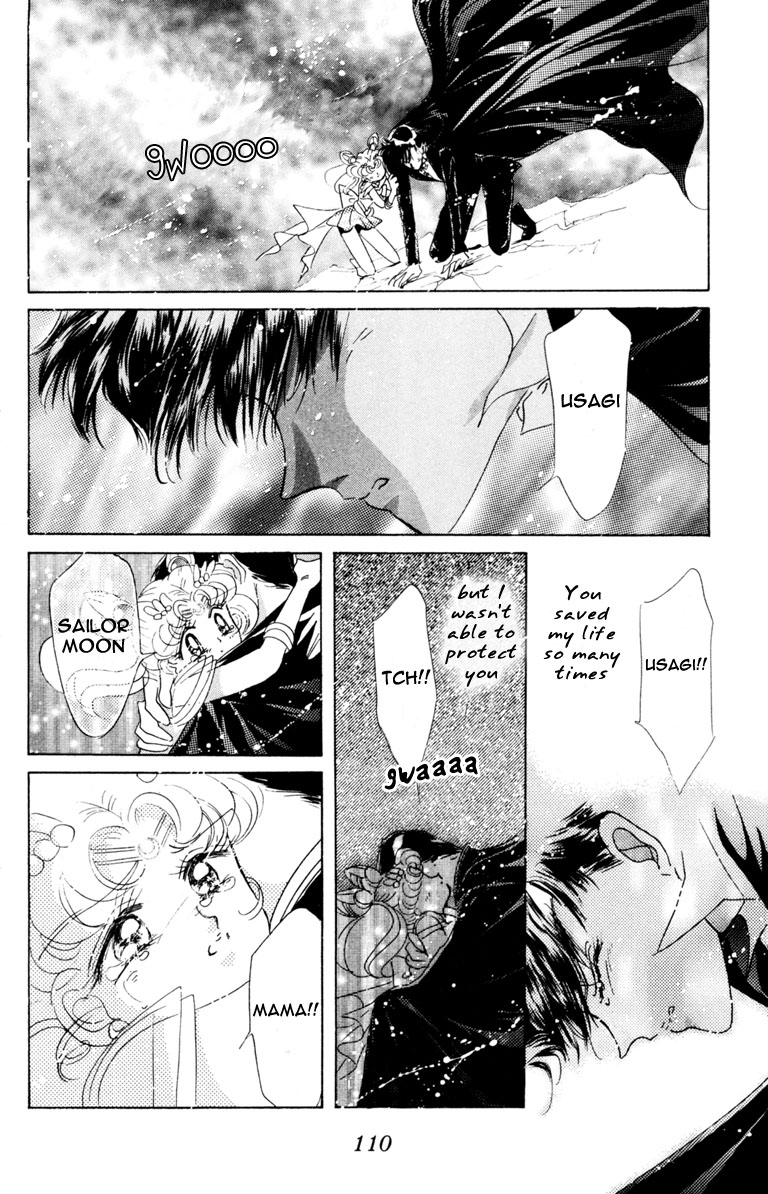
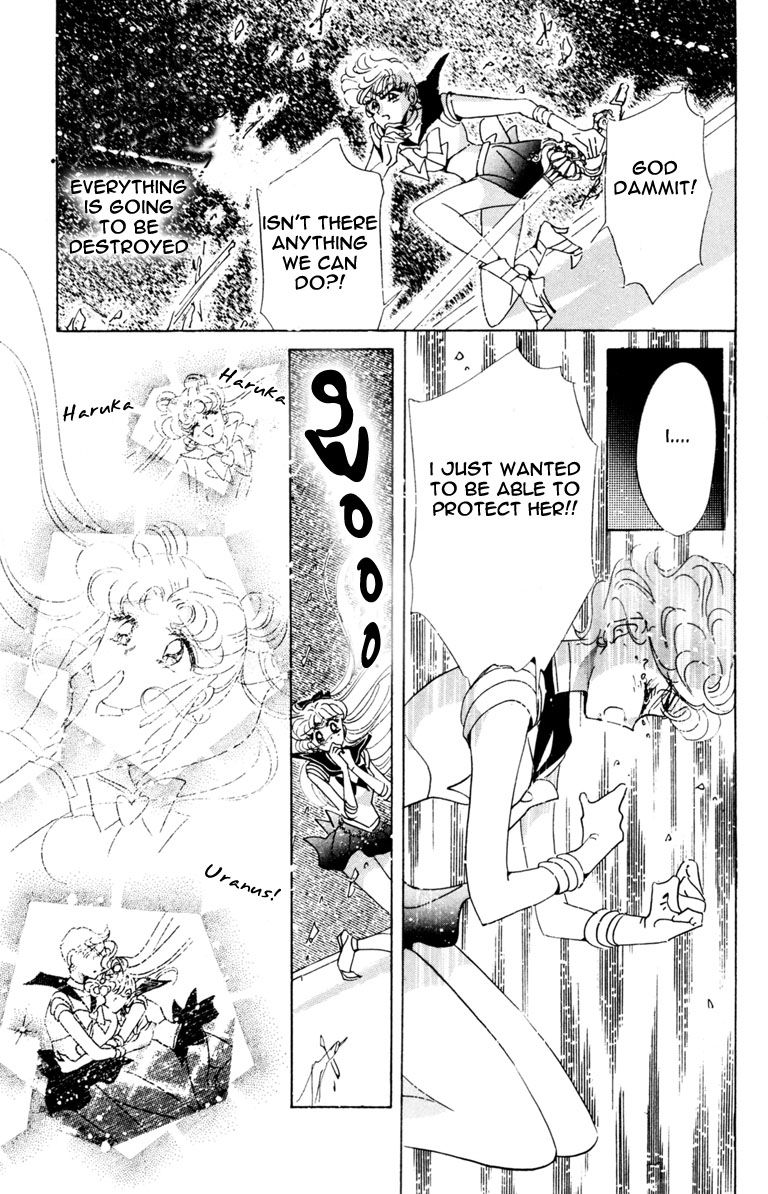
The final act of the third arc beings with the lowering of the Silence Glaive and everything on Earth beginning to die. Mamoru and Haruka are contrasted one last time, tying back to the beginning of the arc, as both are overwhelmed in despair at Usagi's death, both wishing they could have protected her. Chibi-Moon holds closer to her father. Uranus admits that her princess was the one she wanted to protect, as scenes of the two of them through the arc play through her mind.


It's a pretty sweet show of their devotions to her.

It cuts to all the Senshi in despair as the Tau Nebula seems to draw near, that strange otherworldly galaxy dying out slowly connected to the feelings of imminent death. Chibi-Moon quietly looking up pleads "Sailor Saturn..." hoping that her friend Hotaru is somewhere within that strange Senshi of Death. 

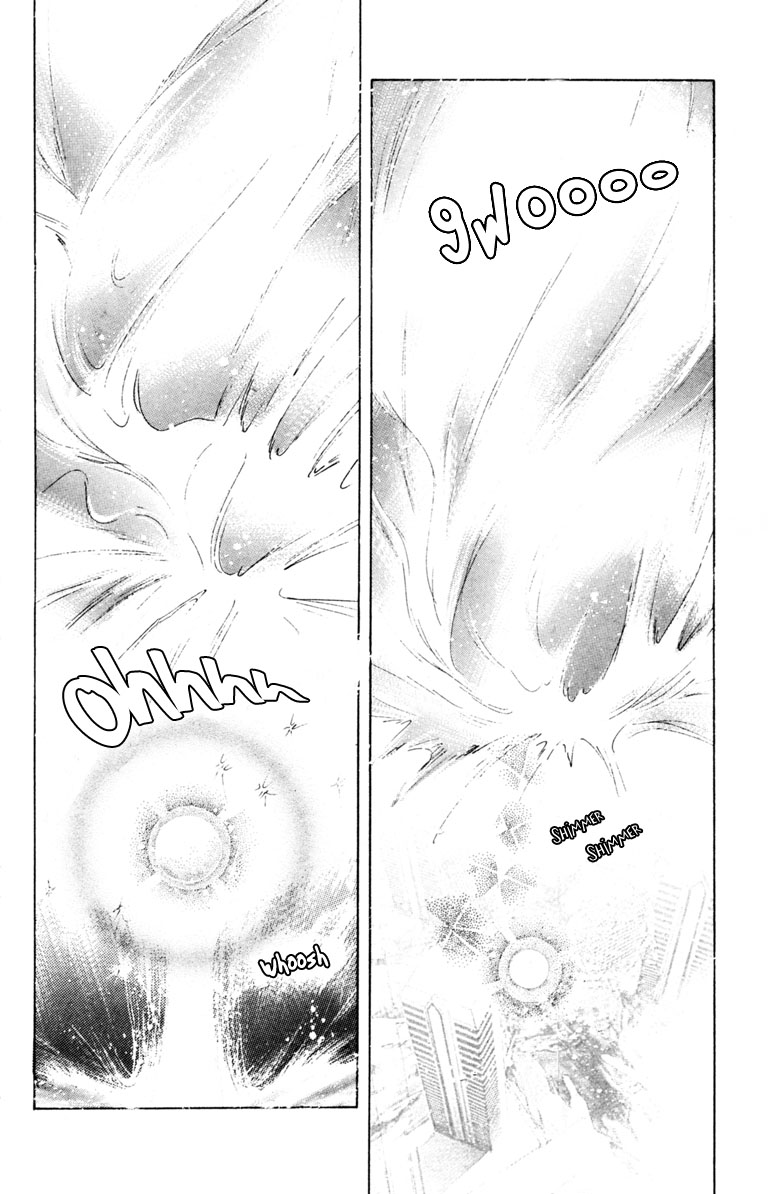
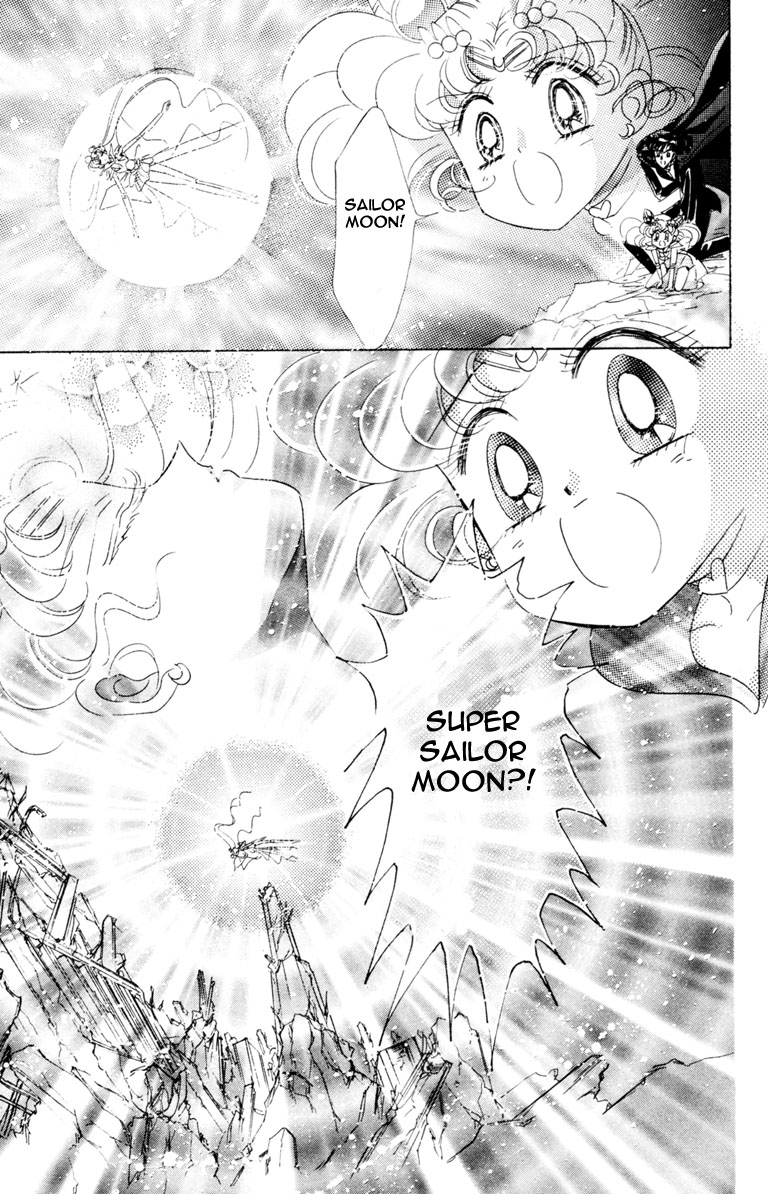
However from within Pharaoh 90, a glowing orb emerges and to everyone's shock Super Sailor Moon appears.


So this is another example of Naoko's particular writing style. Thematically this arc is all about death and rebirth. It thematically makes sense for Super Sailor Moon to appear again, being "reborn", especially given events later this act. With that said it's not really explained how this happened and she wasn't just assimilated. Presumably it's because of the Silver Crystal protecting her or something but nothing like that is said or shown or even really implied. 

In a strange moment, Super Sailor Moon's re-appearance causes all the other Senshi to transform into their super forms as well...while strange on the surface I think I understand the idea. The Senshi were unified in their despair over Sailor Moon's death, with Uranus' despair being used as a symbol for how their hearts were aligned. Because this Super Form comes about via the unity of their hearts, this is meant to show the Guardian Senshi and Outer Senshi truly don't have a division between their hearts anymore, and are all on the same side and can all feel their power of each others hearts within theirs. It's a little bit nebulous and could have been shown clearer, but like Chibi-Moon's, it's not a deus ex machina because it's not actually used to solve a problem. At best, it's character development shown through a soft magic system and, at worst, it's fanservice.

Pharaoh 90 tries to run away from Sailor Saturn back to the Tau Nebula. Sailor Saturn being a heroine from a Shojo Manga, and a generally wholesome type character of course responds 


...I freaking love Saturn. 

Saturn proclaims she's the guide of death and will lead Pharaoh 90 to a world of void and silence. Moon and the rest of the Senshi are shocked as Saturn seems to be going in with him. However Saturn tells them there is no need to despair as with the coming of death, there is rebirth, with the coming of the end, there is hope proclaiming to Super Sailor Moon it is Usagi herself who brings about those things, contrasting the two of them as a dichotomy. Saturn continues by saying that because Super Sailor Moon released the power of the Silver Crystal and the Holy Grail, it's now possible to save the planet as Saturn is the one who brings about death so rebirth may come. The implication I think is that while death was inevitable, Usagi trusting in it demonstrated by her resurrection and awakening of Sailor Saturn, allows for rebirth.

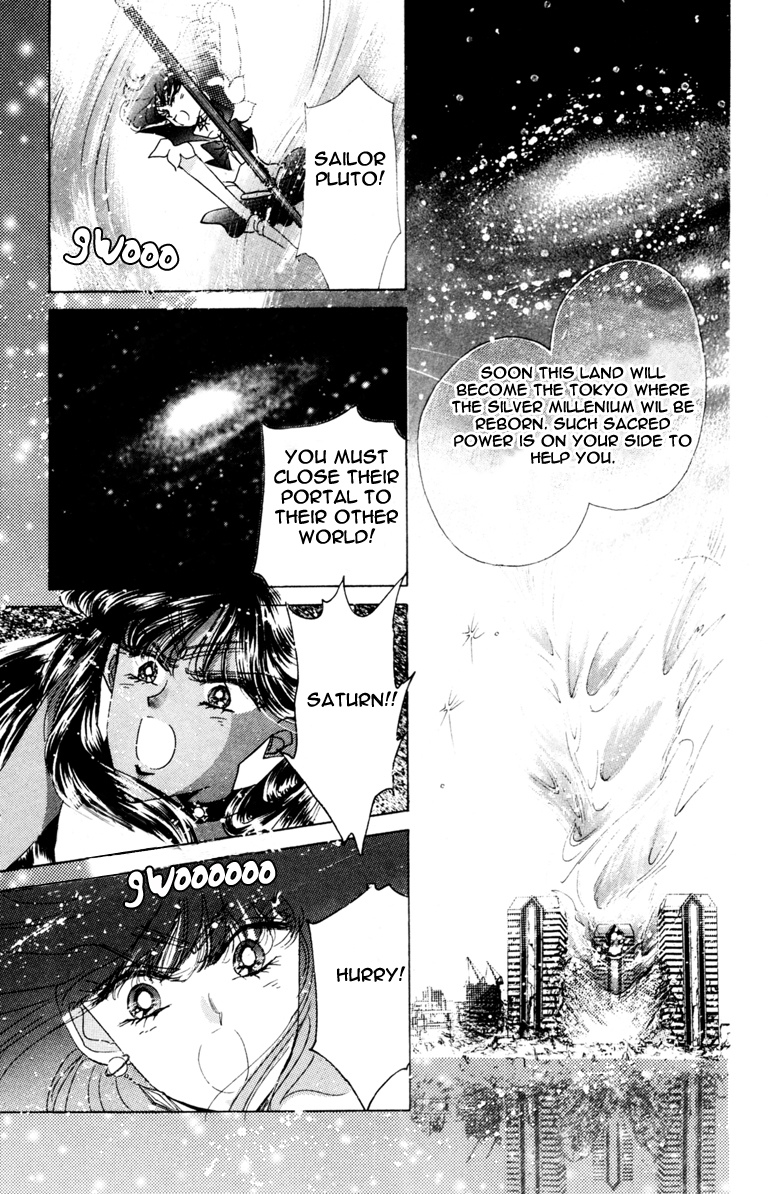
Saturn calls out to Pluto and calls upon her and asks her to use her spacetime powers to seal off Saturn and Pharaoh 90 into the other dimension. That way Saturn can fulfill her duty and lower the glaive, releasing the silence, without it reaching the main dimension. Pluto doesn't want too but Saturn implores and Pluto invokes the god Chronos to seal off the Tau dimension, and Saturn along with it.


She takes it well


It comes a little bit out of nowhere. While I think Naoko's art here is great, Pluto is suddenly given a large amount of plot significance and connection to Saturn that comes out of nowhere. I get the idea that Saturn pulled Pharaoh 90 back into the Tau dimension so she could fulfill her duty, stop Pharaoh 90, while not killing everyone in the main world. But the need to seal off dimensions sequence feels like it could have been handled a bit more naturally.

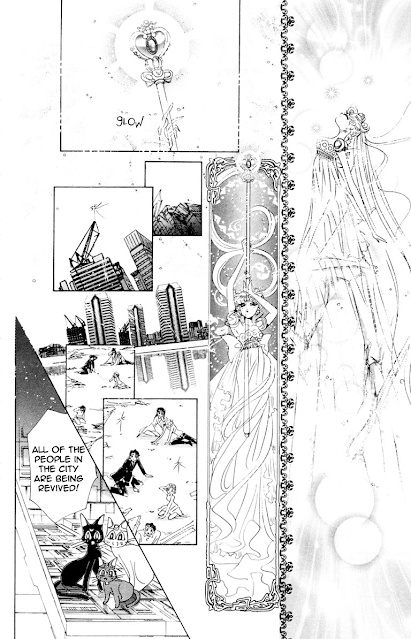
Saturn's words echo in Usagi's mind as she channels her future self, Neo-Queen Serenity resurrecting everyone, Mamoru proclaiming Usagi to be the true messiah afterall. With the resurrection of everyone, the Senshi hear the cries of a baby revealed to be Hotaru reincarnated. The Outer Senshi decide to take responsibility for her and raise her.


You think they ever sit down to eat and it comes up that they wanted to kill her?

Mamoru calling Serenity the messiah is a furthering the theme demonstrated in the first arc when Usagi cried out the Silver Crystal and it healed all the people of Earth, an exaltation of a normal girl like Usagi as being capable of virtue such as to become savior of the world through her love. Likewise the theme of death and rebirth is so evident it hardly needs to be explained. Hotaru who was dead first metaphorically, nigh-literally, then actually literally is reborn and through her sacrifice is given a new greater life. 

The Outer Senshi show the Guardians the infant Hotaru, much to Chibiusa's shock, mentioning they will raise her as her parents, and it is time for them to leave all mysteriously and dramatically. Wouldn't be the Outer Senshi if they could do anything un-dramatically, normally, even something as mundane as saying goodbye.

Chibi-Moon asks where they're going and Uranus answers all dramatically "maybe close by, maybe far away." basically saying nothing. I get it's poetic the way it refers to how space for a Sailor Senshi can seem so small or big whether you measure by the measurement of us mortals or by the immensity of the cosmos or that space between our hearts, but literally that statement says nothing whatsoever. Chibi-Moon asks will they ever see them again and Pluto gives a far more sensible answer that of course they will see each other again because they're allies. Sailor Neptune tells Chibi-Moon that they loved her, their little princess and gives Chibi-Moon her mirror as promise of their meeting each other, saying she can use it to see herself grow stronger and more beautiful.


It's all very sweet and touching. If you're wondering why all the emphasis on Chibiusa, we're transitioning to the Dream Arc, aka the Chibiusa arc. The Outer Senshi's promise will have more meaning in that arc.

The Outer Senshi depart in the most over the top manner possible, by teleporting away to their helicopters where they leave just as the Inner Senshi get there, Sailor Moon thinking she's also sure they will meet again.


The emotional conflict of the entire arc has been the relation between the Guardian Senshi, and the Outer Senshi, the emotional gap between them formed by duty and distance and age and circumstance. The major emotional developments in the arc are when the characters grow in understanding and a unity of their hearts, and when they all attain their super forms I believe that was supposed to be the emotional climax, a demonstration of the unity of their hearts. If so then this moment which is the last moment really of the third arc is a conclusion of the emotional journey of the two groups as they have come together and promise to do so again. 

One timeskip later we get the introduction for the Dream Arc. Chibi-Moon writes a letter to her parents in the future telling them she's become an elegant Sailor Senshi and will return to the future on April First. I don't really see how this makes sense, given she could just return to the moment after she left. There's also a newspaper talking about a total solar eclipse, the greatest cosmic event of the century, and if you have any knowledge of how these plots tend to go that means it's the inciting incident for the next arc.


We cut to the Guardian Senshi who are excited and celebrating getting into High School, particularly Usagi who is admiring her Juuban High School uniform and while Rei is still at TA, Minako has now joined the other's high school. 

The girls all roast Usagi, being unable to believe she passed the entrance exam. Chibiusa wonders if it was the power of the Silver Crystal that did it. All except Minako who embraces Usagi proclaiming that they can not lament their failures together and be failing buddies, making the bunny cry; though either from continual mockery or joy is unclear. The girls all express what they want to do now that they're in high school, their dreams you could say; Minako is going to join the volleyball club and go to idol auditions on the weekends. Makoto is going to join the cooking club. Ami is going to join the computer club and Rei the archery club. Usagi wants to join the manga club so she can read more manga (like the reader right now.)


Even though they're being mean to poor bunny, it's still a pretty cute funny scene, especially Minako and Chibiusa's reactions. It also sets up the major theme of the Dream Arc. 

Mamoru shows up, now a freshman at KO Medical School, the college Ami wants to get into. The Senshi realize today is the day Chibiusa goes back home and ask her to come back and visit them, telling her that she can stay with them anytime and give her their goodbyes. Usagi, Mamoru, and Chibiusa go to the park for Chibiusa to go to the future, Chibiusa asking, to Mamoru's chagrin, if he can carry her there.

Usagi and Mamoru do the concerned parents routine, asking Chibiusa if she has everything, going over all the things she needs in the future. Diana gives an adorable polite goodbye with Mamoru telling Diana to come back soon. It's revealed that humorously Luna and Artemis are doing the crying parents routine over Diana leaving. Usagi asks if they have Luna-P, commenting that she hasn't seen it in a while and Chibiusa confirms she has it in her pack, a cute little reference to Naoko not really including it in the story or any drawing since the second arc.


There, they see that a large crowd has gathered over the eclipse. We get some exposition about eclipses in general for readers that don't know what an eclipse is and exposition that this particular one comes once in a thousand years and that the "new moon will completely cover up the Sun." ...symbolism. If you've read the new arc but the new moon, the new character related to the Moon associated will overtake the character associated with the Sun. There's also a bit of pun humor hard to translate into English.

The eclipse begins and the sky grows dark. Chibiusa hears a clear bell sound others don't seem to hear and than she and Usagi hear a voice calling for them to "help me." They turn around to find the voice belongs too...


An ethereal pegasus. Wasn't there a crowd of people nearby? This is the start of something the dream arc is known for, things getting a bit more esoteric and surreal than usual, much like a dream. How you feel about the Dream Arc seems at least partially determined by how much you like or dislike that.

The pegasus calls out for the "young maiden" to help him before fading away. Usagi, Chibiusa, and Diana all get shocked faces before Usagi and Chibiusa begin arguing over who he was referring to prompting an adorable tiny exasperated head drop from Diana. Mamoru saw the pegasus too but their talking about the pegasus is cut short by the eclipse reaching it's zenith truly beginning the Dream Arc. 


Act 38 is hard to talk about holistically as the last third is basically the start of a completely different story. Really this act is comprised of thirds; the conclusion to the battle with Pharaoh 90, the epilogue with the departure of the Outer Senshi, and the prologue to the Dream Arc.

The first third probably has the best parts of the act with the dramatic paralleling of Mamoru and Haruka, Sailor Saturn's hilariously creepy proclamation of loving the agony in the moment before death, and the Senshi all getting their super forms as a demonstration of the unity of their hearts. On the other hand it also has the biggest writing troubles with the forced tension of Pharaoh 90 suddenly being depicted as a threat when Sailor Saturn was easily beating it last act and the slightly stiff feeling drama about Pluto sealing off the Tau dimension. I think it's clear Naoko was thinking that if the act didn't have any sweeping drama, the act would feel anti-climactic as the end to the Mugen arc, a mindset I think she improves dramatically by the time of the Stars arc. 

The second and third sections are obviously both a lot softer being an epilogue and a prologue respectively, and Naoko does a good job of filling both, especially the last third with cutesy wholesome parts. The second third I think is pretty good as a conclusion to the emotional arc of the Mugen Arc, the disunity between the Guardians and the Outers, though I think the symbolism could have been made more apparent.

The prologue of the dream arc is pretty good, filling the audience with mystery; who is this ethereal pegasus and which of Usagi and Chibiusa does he need the aid off? What is the relevance of the mysterious eclipse? I think it's pretty good funny and cute writing from Naoko with things like Chibiusa and Diana's goodbye, Diana's being all polite, the reference to Luna-P, the cute way Usagi, Mamoru as well as Luna and Artemis say their goodbye to their daughters. It also starts the more ethereal and even mildly surrealist feel of the Dream Arc which is a bug or a feature depending on who you ask.

Act 38 is kind of the opposite of Act 37 to me. Act 37 focused on one thing and did it exceptionally well but didn't have a lot of varieties of the types of goodness to it. Act 38 doesn't do anything as well the emergence of Sailor Saturn, all three of its parts are only good and not great, but it does have a large variety of types of goodness from drama to cuteness to funny to emotional spiritual resonance. In that way I think it really can be seen as the shift from the Mugen Arc to the Dream Arc, an intense and arguably darker arc focused on evoking the grandeur of spiritual ideas to an arc with some more comedic elements and with a wider variety of types of appeal.