Tuesday, March 27, 2018

Skill and Intelligence Tiers

Skill and intelligence and scores that tend to be hard to rate due to not being quantitative. I wanted to quickly give how I rate them so you can know what I mean when I source them and maybe you can adopt this or elements of this if you like it.

Skill Tiers:

D Tier: Normal Human Range: No particular martial talent
Low D Tier: Physically Uncoordinated, Clumsy
Mid D Tier: Average Human
High D Tier: Dexterous, no combat skill but is physically fit in ways that could translate to combat

C Tier: Warrior: Has some combat experience and training
Low C Tier: Martial Arts Beginner, Military Recruit, Individual with some level of combat training or has been in a few fights
Mid C Tier: Martial Arts Higher Rank, Veteran Soldier, Individual has notable combat experience
High C Tier: Martial Arts First-Degree Black Belt, Experienced Soldier, Individual has invested many years in fighting

B Tier: Master: Peak Human Levels of Skill
Low B Tier: Martial Arts Master, Military Commanders, Can take on numerous C Tiers at once
Mid B Tier: Martial Arts Master of Multiple Styles, Special Ops/Elite Soldiers, Best Units
High B Tier: Best Martial Artists/Soldiers who have ever lived

A Tier: Superhuman: Can Perform Superhuman Feats
Low A Tier: Superhuman-ly coordinated and skilled, Immortal Entites can often end up here just through having centuries or millennium of experience
Mid A Tier: Can solo an unarmed army or an army of ancient weapons
High A Tier: Can solo an army with modern weaponry

S Tier: Godly: Can break reality with one's skill
Low S Tier: Can beat entities far more (like a tier above) raw powerful then you purely via fighting skill
Mid S Tier: Can alter the laws of physics purely through fighting skill
High S Tier: Conceptually Skilled. Omnipresent wherever there is fighting or comparable to entities that are such


Intelligence Tier List:

Intelligence is tricky because it's a combination of reaction time, planning ability, and raw knowledge. The former I link with reflex speed. The other two I cover in the idea of how fast one can use intelligence to gain an advantage. I link this with Kardashev Scales, a fictional model to measure civilizations. Some important examples:

Type 0.1 Civilization: Fire and Stone/Wood Tools
Type 0.2 Civilization: More Complex Stone/Wood Tools, Early Metal Tools
Type 0.25 Civilization: On Earth this was the Roman Empire
Type 0.5 Civilization: The Industrial Revolution
Type 0.75 Civilization: About Modern Times (we are currently ~ 0.73)
Type 1 Civilization: Planetary Civilization: Proposed powers include weather manipulation, life creation, Asteroid/Planetary Mining and Colonization
Type 2 Civilization: Cosmic Scale Constructions like Dyson Spheres, Advanced A.I., Teleportation, Rudimentary Time Travel
Type 3 Civilization: Advanced Time Travel, Able to create stellar or higher level cosmic events, can affect the fabric of reality, quantum control

Tier 6: Sub-Human: Less intelligent then a human
Low Tier 6: Reactivity. Basically Mindless.
Mid Tier 6: Has the awareness of most animals to avoid things that threaten it and to attack at weak points
High Tier 6: Can use tools

Tier 5: Basic Human: The Normal Human Intelligence Range
Low Tier 5: Dumb Human Level, not very smart
Mid Tier 5: Average, no special intelligence level, can create technology like that of a type 0.1 civilization with notable prep time
High Tier 5: Clever, smarter then normal and can trick enemies, can create technology like that of a type 0.2 civilization with notable prep time

Tier 4: Advanced Human: Smarter then the Average Human, but within reasonable bounds
Low Tier 4: Genius in at least one field, can create technology like that of a type 0.25 civilization with notable prep time
Mid Tier 4: Genius in many fields. Revolutionary Genius in one field. The smartest real life people would probably be here. Can create technology like that of a type 0.1 civilization during the course of a battle and can create technology like that of a type 0.5 civilization with notable prep time.
High Tier 4: Revolutionary Genius in many fields. Stretching the bounds of what is reasonable. Can create technology like that of a type 0.2 civilization during the course of a battle and can create technology like that of a 0.75 civilization with notable prep time

Tier 3: Metahuman: Advanced Machine levels of intelligence in all fields
Low Tier 3: Can uplift a planet to a higher level of intelligence single-handedly and create wondrous technology. Can create technology like that of a type 0.25 civilization during the course of a battle and technology like that of a type 1 civilization with prep time
Mid Tier 3: Can create an advanced science-fiction world from a normal world and quickly come to rule over a primitive world alone via intelligence. Can create technology like that of a type 0.5 civilization during the course of a battle and technology like that of a type 2 civilization with prep time
High Tier 3: Can quickly take over the modern world through raw intelligence and can create essentially magic from science. Can create technology like that of a type 0.75 civilization during the course of a battle and technology like that of a type 3 civilization with prep time

Tier 2: Superhuman: Supergenius who can create science-fiction mid-fight and perform impossible feats from science
Low Tier 2: Can rapidly invent technology like that of a type 1 civilization. Can easily take over an advanced world via intelligence. Can transform the world easily with their technology. Can invent seemingly impossible things to our current understanding.
Mid Tier 2: Can rapidly invent technology like that of a type 2 civilization. Can transform the solar system easily with their technology. Can easily invent seemingly impossible things and can even invent unimaginable things.
High Tier 2: Can rapidly invent technology like that of a type 3 civilization. Can transform the galaxy or beyond with their technology. Can easily invent seemingly unimaginable things. Can basically do cosmic magic with intelligence.

Tier 1: Cosmic: Is a Cosmic Entity with a similarly higher sense of understanding
Low Tier 1: Mind includes the data of a galaxy or more. Can process the information of the universe. Mind can understand any kind of cosmic event on a greater plane then normal humanity. Intelligence is so great that the character can warp reality with raw intelligence
Mid Tier 1: Mind includes the data of a universe. Can process the information of the universe all at once. Can simulate all permutations of a fight and pick most favorable one. Character knows everything going in the universe. Often can warp reality via raw intellect to a similar degree as they can understand
High Tier 1: Mind includes the data of the multiverse. Can process all possible universes and select most favorable one. Character knows everything going on in the multiverse.


Tier 0: Nigh-Omniscient
Nigh-Omniscient characters know almost everything. While I categorically deny that a fictional character can actually possess omniscience, it is possible for them to know everything about their own series (or almost so) in which case they would be Nigh-Omniscient.

Saturday, March 24, 2018

Magical Girl Popularity Tiers

This is internal Magical Girl Tiering on how popular and well-received a Magical Girl series is in case you ever hear the terms being brought up. Note that this is not my or any individual's particular rankings of quality, it's simply an expression of how much the collective recognizes and likes each series.

I should note this is generally only for Japanese Magical Girl Anime/Manga. I haven't spent enough time in the Western Magical Girl Fandom to know if they follow the same tier convention


S Tier: The Goddesses. If you want to challenge them, you better be ready for an argument, so large that they count as a sub-genre in themselves.
Examples: There are three of these exactly; Sailor Moon, Cardcaptor Sakura, Puella Magi Madoka Magicka

A Tier: Extremely popular, well-liked by almost everyone, solid quality. Not liking an A Tier generally draws a lot of attention
Examples: Kill La Kill or Little Witch Academia

B Tier: Pretty Popular, maintains smaller decided sub-fandom, good example of specific magical girl subgenre. Not liking one is seen as being sort of picky but nowhere near as notable
Examples: Tokyo Mew Mew or Flip-Flappers

C Tier: Mixed Reception, has defenders that argue it should be in B Tier, has detractors saying it should be D Tier, has parts that are real deal-breakers for people.
Examples: Wedding Peach or Mermaid Melody Pichi Pichi Pitch

D Tier: Usually really boring uninspired series without any specialness to them or just things that have some bright spots but otherwise don’t really have anyone defending them outside of saying that “it’s better than it could be”
Examples: Crossprayers or Mink

F Tier: Just bad, like real trash. Everyone actively depises. Virtually no serious defenses.
Examples: Naria Girls or Magical Girl Erena

Friday, March 23, 2018

Metafiction in Versus Debating: The Absolute

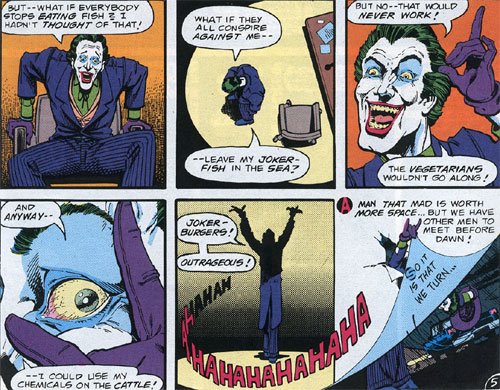
Image result for Joker turning the page

In the later 600s, early 500s BC, the Greek Philosopher Thales proposed that the universe was made of water.

More specifically, he said that water is the "arche" of existence. "Arche" is a word that does not seem to translate very well into English, but it refers to something's fundamental substance, something primordial that is not formed but instead forms everything as component. 

Let us imagine for a second a hypothetical Thalesian Cosmos. The Cosmos is formed of water. All things in it are simply water in different forms. 

If we were to take a being that could magically manipulate and move water with gestures and place them in this universe, what would change for them? They would find that their capacities had suddenly grown to encompass the whole of the cosmos. With enough scale and precision they should theoretically be able to turn stones into people simply by shifting the water that comprises them. They could cause a planet to not be a sphere and instead be a cube should they have enough control. If one gives them an arbitrary level of control of water, and all things in the cosmos are made of water, they should theoretically be able to do anything they wish.

Let us move our attention from water to something else...ink perhaps. Let us imagine a hypothetical universe that is comprised of images made of ink overlayed onto sheets of paper that are in layed down in a spatial sequence or moved between them with such speed that to an outside observer it appears they form a continuum of motion. If in these ink universes, there were entities that were....again I stress HYPOTHETICALLY alive, and one was able to say change the position of the ink that comprises their cosmos, they could, again given an arbitrary level of scale and precision in their control, be able to form any picture depicting anything they wish and it would thus be so.

More abstractly, let us imagine that there was a sequence of data, a set of 1s and 0s used in binary to indicate the machine controlling it to display a set if images in proper time. We can hypothetically imagine the existence of a species of data entities, who recognize themselves as sets of repeating code that the machine interprets as displaying a recurring image an outside observer would see as their "body" in the images. Should one of these entities spontaneously develop the ability to manipulate code, it would be within their power if given arbitrary control to manipulate the code to cause any set of images they want to appear. 

Metafiction. Infamously, at least to me, difficult to discuss in a versus context given how inherently specific to the series in question it is. Metafiction from an artistic standpoint is an artistic movement that does not attempt to create a self-coherent hypothetical reality, but instead makes evident it's own constructed arbitrary nature for a point. Metafiction is against a traditional idea of narrative, the idea of suspension of disbelief, where the audience is expected to pretend in a hypothetical reality being expressed for the sake of gaining some information from the hypothetical reality. Metafiction specifically makes the viewer aware that it's fiction for the sake generally of expressing some point about fiction or some subset of it.

Metafictional Abilities, or Metafiction in the versus sense, refers to entities being able to manipulate their medium in order to gain an advantage in fight. Metafictional Abilities are notoriously difficult to extrapolate. Given that metafictional is currently "en vogue" as it were in the video game scene, characters with these abilities and which people want to debate are brought up fairly often and so need some level of understanding to achieve. 

A rule that versus debating has, that I consider very important, and yet is also frustratingly ambiguous is verse equalization. What verse equalization means it that it is assumed abilities from one universe would work on characters from another universe even if their physics are different. In other words, soul manipulation would still work on the crew of the Enterprise, even though they have never been shown to have souls, because it is assumed the power works as normal. Verse equalization I imagine is important to understanding how to use metafictional manipulation in versus.

Let me take a step back and talk about the fundamentals of versus debating for a second. When we say "X vs Y", we are really packaging a more complex question in there that usually amounts to the same thing, namely "If this hypothetical entity x from hypothetical universe a was real and had the capacities presented to them, and hypothetical entity y from hypothetical universe b was real and had the capacities presented to them and the two were to fight, what would be the outcome?"

The problem with introducing metafiction is that metafictional abilities obviously assume the character is in a fictional work. We do not assume real life has a "plot", yet some characters can manipulate the plot of their work. One might innocently ask "what's the problem with asking who would win between the two under the assumption that they are both still fictional?"

The problem with that is that two fictional entities cannot fight. This is because two fictional entities do not exist and therefore cannot perform actions or possess agency and will. That might sound hugely pedantic, however in this particular discussion it is very important. Why is this important? Well if we to assume as a hypothetical that these two fictional entities, that are fiction and thus do not actually exist, actually do possess wills and capacities to act (purely in a hypothetical sense), then you will quickly find that neither have the capacity to affect each other, as both do not exist being fiction. To have any form of interaction, one must presume that both characters have some level of reality. 

So this leads to the question of how to equalize? However on some level I think one can maintain the continuity of abilities from the hypothetical universe the characters "exists" in to the hypothetical reality of the fight. If for instance a character in an animation has the ability to move water with their mind, what they are moving is not actually water but ink that resembles water, but we don't say the character is actually an "ink that resembles water manipulator". We recognize that as a hypothetical representation of water, and thus in a hypothetical fight situation they would be able to manipulate hypothetical water just as they do in the hypothetical universe that is their original universe.

But that begs the question, what are metafictional manipulators manipulating in a hypothetical real universe? As far as we know, our cosmos does not have any distinguishable arche, though it is easy enough to simply say one, since anything we define as being the arche of the universe will be the definition of the arche of the universe (though it's properties we will still have no knowledge of). I generally refer to this as "the absolute" referencing the idea of the "planes" of reality. An alternative and more vague term one could use is simply "being". Being, or simply "existence" is "that which is" and is shaped into recognizable patterns and forms by abstract concepts, patterns...

In this vein, existence erasure might be seen as a very specific form of manipulation of the cosmos's arche, similar to a character in animation erasing another character, or a character in a game deleting another character. A character that has metafictional manipulation thus in a neutral battlefield would have, going by verse equalization, "being" or "absolute" manipulation and thus their powers would work as normal.

From there, one can intuit the properties of specific forms of metafiction based on their consequences to characters in their respective verse. However to me there are two more specific cases that need to be addressed.

The first is what happens when a character can supposedly affect the real world. Now obviously no fictional character can actually affect the real world. The idea of them can just as obviously, knowing about the idea of a character can influence real people to act in certain ways, but it must be differentiated that the idea of a character is not the same as pretending that the fictional construct of a character actually exists and can influence the real world.

But this leads us to ask what it means if a fictional character is presented as going into the real world. What is actually happening is we are being asked to create a hypothetical reality where this already hypothetical character can enter the real world. In other words it's a different layer of hypothetical. 

It is pretty easy to imagine dual layers of hypothetical. I'm sure anyone reading this can think of a fictional universe that has a popular fictional show or book or game within it that has no real-world counterpart. Discussing a fight between a character from the first fictional universe, and the fictional universe within that would require us to hypothetically imagine both being real anyway so it's for the most part unimportant. It it important to differentiate this from two characters being equally real but one existing in the context of the story "inside" of a work that otherwise seems to be a fictional work. A "real" entity existing inside a video game does not need to be taken out of the game to be put into a fight against a normal "real" entity. This is specifically about when one entity is fictional from the perspective of the other.

The other important question that is raised to me, is the question of interactivity. I'm gonna be honest, I don't really understand how to incorporate interactivity yet under any standarized rules. Interactivity from the real person's perspective, essentially fragments the hypothetical into a set of hypothetical realities of varying degrees of probability. By this, interactivity is not a metafictional phenomena in itself, since it is merely part of the interface for which the recipient of the hypothetical reality can experience it. Obviously though metafiction can be mixed with interactivity, if a fictional character arbitrarily limits the "player's" options.

Now again obviously a fictional character can not actually limit a player's options are. What is happening is in the game code there are specifications made to present the sequences of images representing the game as a character stating that they are altering the player's interface and then having the data shift accordingly. We are being asked therefore again to imagine a hypothetical reality where a fictional character can interact with the "real" world, in this case the game they are programmed within. Again this is two layers of hypothetical reality. In this case it would seem to be that is merely another expression of metafictional manipulation, manipulating game data within the "lower" hypothetical reality we have imagined.


And so that's it. That is my best interpretation, going back to fundamentals, on how metafiction manipulation would work in versus. 

Tuesday, February 27, 2018

Sailor Moon Stat Trinity Reference Blog

This is just a simple blog that I will link to if asked about how strong various SM characters are. Note that this is only the best feats rather then bit feats, there is more supporting this but these are the best ones...

Manga Canon:


DC/Durability:

Wall Level: Mooncats like Luna and Artemis can jump multiple stories. Admittingly haven't calced this one but I am guessing it would probably be something like wall level.
Scales to: Basically everyone. Artemis needed Minako to even fight weak Dark Agency Agents, wasn't like he was able to do anything against them alone. I'd guess, though I can't be certain it'd scale to like the random spirits and vampires running around as well. I mean Mrs. Hubert the vampire was able to at least survive a Sailor V kick so I'd give a guess that everyone who has powers at all scales to at least this. 


Building Level: Devleene was able to maintain a building with her presence. A Genius Loci Spirit does the same in Chibiusa's picture diaries
Scales to: I have to guess it would be almost everyone. The spirits are never presented as being any kind of major threats with obvious exceptions. And it's not like Devleene was some high tier Dark Agency Member. Her job was literally to provide sweets and tea to Danburite. 


Town Level: Electric Fighter Luuga created a dimension extending to the horizon. Sailor Mars destroyed a similar dimension with her first attack. Sailor V’s ultimate attack is “Love Megaton Shower”
Scales to: So Luuga is actually implied to be a major Dark Agency Member, though that still means she was way below Partially Awoken Sailor Venus, aka Sailor V. Honestly I want to guess the Youma were above her considering Morga was able to survive an attack, if a not very serious one, from Partially Awoken Moon and Sailor V was beating up Luuga in her own dimension while Amano controlled her. At the very least it easily scales to Shitennou and to people above them.

Country Level: Zoisite created a heavy storm that covered all of Japan for many days
Scales to: Probably at least to the other Shitennou Jadeite and Nephrite (though Kunzite didn't need it). Might just be dc and not dura though. This might scale to partially awoken Senshi considering Zoisite knew his power paled in comparison to Mars'

Multi-Continent Level: Kunzite shifted the Earth so that Tokyo would be the North Pole
Scales to: So does it downscale to anyone stronger then him? Not really. You could scale it to Fully Awoken Senshi if you don't think they scale to Base Princess Serenity but beyond that anyone who would scale to it from above scales to better anyway. What about upscaling? Is there anyone close enough to him in power that they should basically have his stats.....ehhhhhhhhhhh I can make a solid argument the Partially Awoken Senshi weren't that much weaker then their fully awoken counterparts based on how fully awaking, meaning getting their memories back doesn't mean much when then Silver Millenium counterparts were implied to be weaker from a living a life of eternal peace and how the other Shitennou really shouldn't be that weaker then Kunzite logically but it's still a stretch so.......idk

Stellar Level: Using the Ginzhuisho could blow apart a star casually and was compared to a supernova. A huge number of people survive inside Nemesis said to a black hole as well as the end of spacetime
Scales to: Upper Tiers of the First Arc, and a lot of people in the Second Arc Scale to this since Baseline Princess Serenity who tanked her own energy output would be weaker then First Arc Sailor Moon and it's implied that baseline Usagi after becoming Queen of the Moon had the same level of power as First Arc Sailor Moon. 
.
 Solar System+ to Low Galactic: Planet Nemesis was supposedly a Black Hole, capable of enveloping the star system and whole explosion in the sky was the size of the sun despite being past the orbit of Pluto and was calculated to be in the KiloFoe to MegaFoe range, a low galactic feat. Chibi-Usa destroys two “weaver stars” in one attack though they were in human form. Princess Snow Kaguya created a nebula.
Scales to: Second Arc Sailor Moon and Chibi-Moon did the first feat using "Moon Princess Halation" however by the Third Arc to fight the Daimon Sailor Moon had to draw down more power from Neo-Queen Serenity after the powerup she had already gotten in order to use "Moon Spiral Heart Attack" heavily suggesting that Moon Princess Halation wouldn't have killed the Daimon. This basically means it scales to everyone from the Third Arc and on that is even remotely on par with the Senshi. 

Galactic+: Pharaoh 90 warped spacetime from a “distant galaxy”. Pharaoh 90 moves a galaxy at mftl speeds. Pharaoh 90 created a galactic sized wormhole. Sailor Saturn brought oblivion onto Pharaoh 90’s galactic+ sized dimension. The Silver Crystal lighting up the universe at the end of the Fourth Arc
Scales To: Super Sailor Moon's HENSHIN was "tens of thousands" of times stronger then the power of Pharaoh 90 and crew. I know Super Sailor Moon isn't the weakest Super Sailor Senshi but I'd be hard pressed to imagine that any of the other Super Senshi aren't at least as strong as her HENSHIN. Outside of this almost no one. There are no manga villains on the Super Senshi's levels. Pharaoh 90 has galactic feats but his power is still way below Super Sailor Moon and he wouldn't been doomed if his energy absorption allowed him to basically tank her attacks. The fourth arc villains are mostly goofy joke villains who clearly don't scale and all the fifth arc villains are Eternal Senshi Level. 


Universal: The Silver Crystal numerous times warping all of spacetime, and is the source of all energy. The Silver Crystal creating more chaos in spacetime then had ever existed. Princess Snow Kaguya can freeze a universe. The Poison Black Crystal warping all of spacetime. Nehelenia maintained a universe. The Silver Crystal can create a universe. Chaos warping all of spacetime with it’s presence. Lambda Power reset the cosmos.
Scales to: Nehelenia maintaining a universe is most often used to justify basically everyone in Fifth Arc being Universal since Civilian Form Usagi was tanking Civilian Form Galaxia's power said to be way above any of her previous villains and from there everyone scales to at least Civilian Form Usagi. The strongest crystals of the universe tend to cluster around this "warp all of spacetime" levels which is especially pertinent because spacetime are said to be the distortions of energy and will. 

Speed:

1: Luna and Artemis rapidly travel from Earth to Moon. Luna does it again when turned into humanoid form. (Massively Hypersonic)
Scales to: So this one is a bit weird. The Mooncats have the power to briefly channel the powers of their partners so it could be argued this was just that and not of their own volition, that said whenever they have done that it wasn't in terms of speed, it was them releasing large bursts of energy. Likewise Luna was able to do it in her humanoid form. This theoretically could scale to anyone with powers in the verse


2: Minako releasing a burst of latent planet power sends her to Venus (Relativistic to FTL):
Scales to: This was Minako before even transforming for the first time. Honestly you very well could argue this should scale to anyone in the verse, though conservatively speaking it scales to anyone at least as strong as the Partially Awoken Sailor Senshi.

3: Hotaru in civilian form travels to Charon Castle orbiting Pluto in seconds (FTL to MFTL):
Scales to: Not sure honestly....how the fifth arc civilian form senshi scale to anyone in the prior arcs? 

4: Weaver Stars travel a distance of thousands of lightyears ever year casually (MFTL)
Scales to: The Stars act as the civilians of the SM Universe Proper. The civilians are the beings that inhabit the universe. This is again tricky, but at the very least Metalia should scale, as well as The First Arc Senshi, which likely means scaling to everyone in the Second Arc. 

5: Prince Diamond can conquer all the planets in space in a natural lifespan (MFTL)
Scales to: Prince Diamond was pretty fast within the context of the Second Arc, considering he blitzed Black Lady. I'd argue he at least scales to the stronger entities of the Third Arc but eh, it's hard to tell.

6: Princess Snow Kaguya was going to freeze the universe
Scales to: At least Super Sailor Moon, and from her to probably most of the Super Sailor Senshi since Super Sailor Moon was the one who beat her. 

7: Eternal Sailor Senshi travel a galactic distance in seconds repeatedly
Scales to: Basically everyone notable in the Fifth Arc was Eternal Senshi level and Eternal Senshi were able to zip to and from the center of the galaxy almost instantly including low tier Eternal Senshi. Casually.

8: The Silver Crystal’s light travels to the edge of spacetime in seconds
Scales to: Unknown...Kaguya and Nehelenia have both reacted to the light of the Silver Crystal in motion so likely to Eternal Senshi level entities

9: The Lambda power travels across the universe in seconds
Scales to: The Eternal Amazon Senshi seemed to be moving around while the stars sent by the Lambda Power were still at the Galaxy Cauldron which at most is the size of the center of the galaxy. Everyone Eternal Level or up would scale. 

Sailor Moon Classic:

DC/Durability:

Let me first say that their is a fairly consistent track you can use ignoring the universal feats, and then you have the universal feats that jack it up. 

Large Building Level: In Sailor Moon and Kunzite’s Battle, the other Senshi unconscious from battle tank the explosion of a dimension that was the size of a tower and made of negative energy, which seemed to make it harder to destroy
Scales to: Probably anyone significant lol. I mean if the Senshi can tank it unconscious then surely to actually damage them unconscious would require at least this level of power

MCB to Town Level: Kigaan maintained a sizeable dimension, as does Ramua. The DD Girls and Senshi can survive the heat of magma, Droid Furaiki can create a thunderstorm across Tokyo, Droid Nipasu can create a snowstorm across Tokyo.
Scales to: High End Monsters of the Week for first two seasons. Minibosses of first season 

Country Level+: Sailor Moon despite dying, survives the energy of the Silver Crystal’s creating a country sized explosion across the Earth. Death Phantom’s Casual Power was going to lifewipe the Earth
Scales to: Second Arc Senshi should be at least here considering they survived Death Phantom's Casual Power and are likely stronger then first arc Sailor Moon. Second Arc Minibossess probably here. 

Continent Level: Either Queen Beryl and Queen Metalia causes sun spots and disasters across the Earth.
Scales to: Prince Endymion one-shot Queen Beryl. If it was Beryl, then second Arc Senshi should likely be here via scaling to him. 

Planet Level: The Silver Crystal is described as having the power to destroy a planet. The Makaiju and the Xenian Blossom have the capacity to destroy planets, seemingly violently (and tank their own power) yet their power pales compared to the Silver Crystal. Usagi's dying wish on the Silver Crystal reality-warping the Earth. 
Scales to: The First Daimon in S overpowered the power the prior Silver Crystal State, despite being not even a combat Daimon, suggesting that Daimon should be here. This suggested that the training the Guardian Senshi do in S make them jump from country-continent to planet level. Third Arc Minibosses should be least here, as would the Outer Senshi by scaling necessity. 

Stellar Level: The Golden Crystal has the power to destroy the stars, yet the Super Senshi survive the Golden Crystal’s explosion. Super Sailor Moon and Super Sailor Chibi-Moon destroy Queen Badiyanu’s Black Dream Hole.
Scales to: Super S scaling is really weird. The AMAZONESS QUARTET survive the power of the Golden Crystal which just....doesn't make ANY sense whatsoever. Freaking comedy season. That said it should be good for the Super Senshi and for most of the people in Stars since the Super Senshi would likely be as strong or stronger later. 

Multi-Stellar Level: Sailor Galaxia fights Sailor Starlights across the galaxy creating numerous explosions larger then solar systems
Scales to: The Starlights were rivals to the Outer Senshi so it probably scales to the Super Outer Senshi. 

Galaxy Level: Chaos engulfs a galaxy in darkness, Angel Usagi’s light illuminates the galaxy. Sailor Galaxia’s dimension seemingly contains inter-galactic space
Scales to: The Top Tiers; Kakyuu, Usagi, Galaxia, Chaos. 

That said if you want to boost people we consider the myriad universal feats as legit

Universe Level: Super-Beryl claims to be able to destroy the universe. Death Phantom is said to be going to turn the universe into nothingness. Ikasaman was merging and warping "countless" dimensions. Pharaoh 90 is a living universe bigger then the real one that was destroyed in one blast by Sailor Saturn that Super Sailor Moon survived within the center of. Sailor Galaxia is said to be a threat to the universe. 
Scales to: If you accept this conservatively, then Super Senshi level entities considering Super Sailor Moon surived the destruction of one of these entities. More liberally anyone Princess Tier or above, which means basically everyone second arc and later.

Speed:

1: Luna and Artemis run from Tokyo to the North Pole in minutes (Hypersonic)
Scales to: Everyone with powers. The Mooncats are fodder.

2: Fodder Human Soldiers quickly go from the Earth to the Moon (Massively Hypersonic)
Scales to: Likely Everyone with powers 

3: Sailor Moon early in the series outpaces a flash of light from a camera many times (FTL)
Scales to: At least high tier Monsters of the week even in season 1. Every miniboss.

4: The Maikaiju can wander the universe (MFTL)
Scales to: The Second Arc Senshi can perfectly fine react to Maikaiju's movements, suggesting at least Second Arc Senshi and Minibosses and up. 

5: Fiore before finding the Xenian Flower was able to search hundreds of planets for a flower to present to Mamoru
Scales to: Second Arc Sailor Moon was able to keep up with Xenian Fiore, who should be equal or stronger then Base Fiore, suggesting it scales to Second Arc Moon, and from her likely to the strongest second arc entities and to anyone with powers in the later arcs. 

6: Usagi’s Cosmic Moon Power against Pharaoh 90 traveled inter-galactic space
Scales to: Arguable. I guess Pharaoh 90 was moving comparable to it, but Pharaoh 90 also doesn't scale to anyone in particular.

7: Sailor Saturn and Super Sailor Moon fly to the center of a living universe in seconds
Scales to: At least Super Sailor Level Entities, meaning basically Fifth Arc Entities. Super S movie implied Base Outer Senshi were stronger then Super Guardian Senshi, which you use it so scale to everyone in third arc and onward possibly


Might make a part 2 with other canons. If I do Sera Myu, you'll see why I call it the most insane canon of Sailor Moon. 

Saturday, February 24, 2018

Clarity and Precision in talking about fiction

This has just been a peeve of mine for a while, which is people discussing fiction and using undefined terms without any examples so what they are saying sounds comprehensive but really isn't saying anything.

Let me make an important distinction. There are three ways we as viewers relate communally to fiction; opinion, subjective statement, and fact statement.

Opinion: Opinion without any statement is a purely internal reaction without any expression of it to others. Obviously there's no way for this to be falsified since no one else but you is aware of it.

Subjective Statement: A Subjective Statement is a statement of one's personal "real" without any notion towards the theoretical objective world. These CAN be theoretically wrong, you could for instance hold one opinion and then lie and say you had a different opinion, but this is unfalsifiable, (and it would seem to me very highly rare) since no one but you can know your opinion in the first place to compare to the Subjective Statement. There are some people that would claim all statements are here, and in a very navel-gazing philosophical way they are right; in the same way I can't "prove" the room around me exists and is not an elaborate dream, I can't demonstrate any statement being entirely objectively true or false. However for the sake of practicality we generally assume that some things are in fact objective simply so that we can have any sort of discussion ever. I assume then when I say "red" what registers in the minds of those I'm speaking to is something similar to what I think of when I say "red".

Fact Statement: A fact statement is a statement that is meant to be seen as part of the theoretical "objective real" world as opposed to one's personal reality. In other words, it is something that is theoretically innate in the thing itself, rather then something that is projected into it by the viewer...to the degree of reasonable certainty that is necessary for ANY discussion on the nature of things. Again, you can clam EVERYTHING is meaning projecting onto meaningless reality, but on a pragmatic level no one thinks or speaks like that, nor is it registered as helpful to do so. 

The distinction between the second and the third is very important. The second of these, you need not be trying to convince someone to believe, in fact by it's nature it is only existent to the individual. A statement relating to something not innate to the work but instead to a projection of the individual onto the work is a statement not about the work itself but about the individual viewing the work. The Third of these conversely, if you are making as a claim, then you are saying that others should think this, because if they aren't then they are unaware or in denial of something that is supposed to be existent in objective reality, reality as should be understandable to all observers. 


The problem I am finding with a lot of discussion about fiction is that people will say things that are sort of half-fact statements and half-subjective statements, which in practice acts as a way of trying to universalize one's own projection, a wholly unpleasant experience when someone's opinions and resulting subjective statements are unaligned or entirely opposed to the statement.

Examples:

I'll see people state something like this work is:

"well-written/badly-written/light/dark/edgy/artsy/pretentious/clever/deep/subversive/magically delicious"

Literally any adjective. This is a statement about what the verse is in and of itself, a statement of it's nature in other words. Yet somethings I will disagree with them and ask to explain their viewpoint and they won't actually debate the point with me or give direct examples from the text of what they mean (not helped by the fact that a lot of these these terms are deliberately ambiguous to allow them to be used as a sort of blanket statement) they will retreat into the "it's just my opinion".

To me this seems like taking advantage of an ambiguity to cloak a viewpoint as being more objective then it actually is. It might seem I'm just pedantically asking everyone to say "it's well written in my opinion" every time instead of "it's well written" however that's not quite what I'm arguing.

To me the statement "it's well-written in my opinion" is a bit oxymoronic because you are making a subjective claim about something in objective reality . If you think that everything is subjective then obviously is nothing is well-written or poorly-written since that implies an objective standard. Otherwise if you are making a factual claim you are stating that you think that this is the truth, something that is theoretically viewable to all observers and therefore people who aren't seeing it are by necessity ignorant or in denial. If that is the case then there shouldn't be anything "in my opinion" about it. It should be as objective as 2+2=4

That's not say that it's as simple as 2+2=4. You could make a comparison to far more advanced mathematics where there is controversy and different people think different things. What's important to understand though is in that case it's still not subjective. There is still a "true" answer, it's just that the answer is contested.

When people use a few words to describe a work, words that are broad and general, people can have entirely opposite experiences and can draw entirely opposite viewpoints from those words. The more specific you are towards what you think a work IS, the closer you have to remain to the text and the more closely people can follow what you are attempting to communicate.


What all this boils down to is that using singular unclear words to describe your viewpoint on something masks the fact that you are conflating the subjective claim of your personal experience with what, if anything, you think is innate to the work and so if you are going to make claims about something that is outside the realm of your personal subjective realm and it's relation to the work, then be more clear and specific in what you think so that what you are saying can be better falsified and the exchange of information can be less muddled in vagueness.

Tuesday, February 20, 2018

Playstation All-Stars Battle Royale Tier List

Thanks to Ramonzer0 for helping with this, he basically gave me the position of about half the characters 😅


Tier 1: Basically Cosmic Level
Kratos
Zeus
Sackboy

Tier 2: Can solo the Real World
Ratchet and Clank
Cole McGrath/Evil Cole McGrath
Raiden
Jak and Daxter

Tier 3: Can defeat an entire army, but can't solo real world
Nariko
Kat
Isaac Clarke
Emmet Graves
DmC Dante

Tier 4: Comparable to a small squad of soldier or modern armor
Sir Daniel Fortesque
Heihachi Mishima
Parappa
Colonel Radec
Spike
Sly Cooper
Sweet Tooth
Big Daddy

Tier 5: Could likely be defeated by a single armored modern soldier
Fat Princess
Nathan Drake
Toro Inoue

Elegance vs Peculiarity in Fiction

It has come to my attention for a long while now of two opposing human desires that manifest in our stories, two spirits that possess them that contradict. As I know of no names for these I refer to them as "elegance" and "peculiarity"

What are these things?

I am defining Elegance to mean the sense of things being derived from the same principles as each other, a sleekness where all things are used to create the sense of unity

Conversely Peculiarity I use to mean the sense of something being in principle opposed to those things around it. Something that doesn't seem to fit right, and thus creates the sense of dis-unity.

These things transcend genre and medium, though they may be said to be some product or producer of that mysterious quality of atmosphere.

The nature of elegance and peculiarity mirrors our perception of reality. To all of us, in the case of other humans behaviors for instance, observe that they do things entirely unexplainable to our sense of causation. They respond in ways we certainly wouldn't and act to our tastes contra-productive. Yet at the same time some of what they do is bound by the principles of humanity that we share. When they are hungry, they eat as we do. When they are tired, they sleep as we do.

By the very product of there being differences between things that none the less share a same classification, the conceptions of elegance and peculiarity seem inevitable. And we might expect that to each person is a different level of desire for these opposing concepts.

The taste for elegance is seen in the taste for the things of great magnitude and dignity, and in the absolute, that which is all-encompassing, the ideal of the completely universal experience.

The taste for peculiarity is seen in the taste for the contrast, the love of the interesting tidbits and minutiae, the humor for the thing that seems strange and unassociated. There in essence can't be an absolute to the peculiar because it must go against the grain of what is around it.

This leads to an interesting point, which is the Peculiar seems to be somehow a subversion of the Elegant, rather then a freestanding thing of it's nature.

I must confess, I have a very strong preference for the elegant over the peculiar, to the point that I wonder if I can even present the two in a honest fashion, not helped by the lack of conversation I have seen on these two desires.

I must presume my preference is fed by my experience of the cosmos as a great singular entity, the unity seems so ever present, that any arbitrariness comes across not as it was probably intended but instead as a failing to connect points into the Unity properly.

It is most likely that I simply do not have the same enjoyment of diffused elements that others do rather then they are simply not properly connecting the points.

If you look at my favorite works you will notice one theme coming up again and again beyond all else; the inter-connected, unity of the cosmos, the extension of the premise from the small to the great. It is in the great continuity of reality and being as depicted in fiction that I enjoy to the fullest and in the disunity of juxtaposition that I find I don't understand the popular appeal.

I apologize if this blog seems very weird, this was my merely attempting to give names to something I have never heard anyone express.